
💡 Scientists at EPFL published the first complete 3D map of brain lipid chemistry in Nature on October 13, 2026. They identified 539 distinct "lipizones": chemical territories that no gene-based map had found before. The atlas gives researchers a healthy baseline to compare against in diseases like Alzheimer's and depression, where brain lipid metabolism is known to go wrong.
- EPFL scientists analyzed 172 lipid types across 109 brain slices from 11 mice, generating 7 million data points that revealed 539 distinct chemical territories called lipizones.
- Lipids act as "molecular postal codes" linking nerve cell bodies to the distant regions their fibers reach, a type of organization invisible to gene-based brain maps.
- White matter, previously assumed chemically uniform, turns out to contain dozens of distinct lipid zones with previously invisible biochemical diversity.
- Changes in brain lipid metabolism are linked to Alzheimer's, Parkinson's, and depression. This atlas provides the first healthy reference baseline to compare against.
- Honest caveat: this is a mouse brain map. The researchers state clearly it cannot be directly applied to humans; a human version would require a separate study.
What exactly is a lipizone?
Lipids are the fatty molecules that form the membranes of every neuron, insulate axons with myelin, and carry chemical signals across the brain. They make up roughly half the brain's dry weight. But for decades, the dominant brain maps were built from gene expression data: which genes are active where. Lipids had never been comprehensively charted across the whole 3D brain.
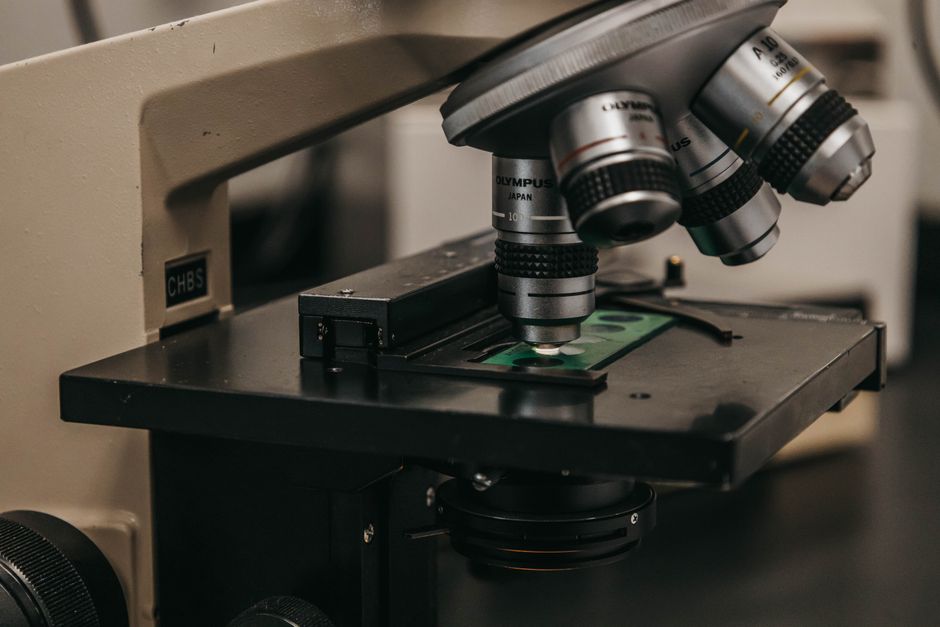
The EPFL team used a technique called mass spectrometry imaging, which fires a laser at paper-thin brain slices point by point, recording which lipids sit at each location. Across 109 slices from 11 mice, they measured 172 different lipid types and generated roughly 7 million individual readings. Machine-learning algorithms then stitched those readings into a single 3D model of the whole brain.
What emerged were 539 lipizones: tightly defined territories where the combination of lipids is chemically distinct from neighboring areas. Some matched familiar anatomical structures. Others drew chemical boundaries that no previous brain map had recorded.
How scientists built the atlas: 7 million readings, 11 mice, one 3D map
The technical challenge was scale. A single brain slice generates tens of thousands of data points across hundreds of lipid channels. Multiplied across 109 slices and 11 animals, the dataset reached roughly 7 million measurements. No standard bioinformatics pipeline could process that volume without losing the fine-grained spatial patterns the team was looking for.
The team built new machine-learning tools specifically for this dataset, designed to detect subtle lipid gradients and define borders where one chemical zone ends and another begins. The full dataset is publicly available, which means other labs can download it as a reference or use the same pipeline to study disease models.
What the lipid map reveals that gene-based atlases missed
The most striking finding was in white matter. This is the part of the brain made up of myelinated axons, the long fibers that carry signals between regions. It has traditionally been treated as chemically uniform. The lipid atlas shows it is not: white matter contains numerous distinct lipid zones, and the myelin-producing cells within it have a biochemical diversity that gene expression data cannot detect.
The atlas also found that a neuron's lipid signature can match the distant region its fibers reach, as if the chemistry of the sending cell and the receiving region share a common code. The authors describe this as "molecular postal codes," a type of organizational principle with no equivalent in any gene-based brain atlas.
A third unexpected finding: pregnancy dramatically reshapes the brain's lipid landscape in the cortex, with changes that exceed the typical differences between male and female brains.
What does this mean for Alzheimer's and other brain diseases?
Altered lipid metabolism is documented across multiple neurological and psychiatric conditions: Alzheimer's disease, Parkinson's, depression, schizophrenia, multiple sclerosis, and several neurodevelopmental disorders all show disrupted lipid patterns. Drug developers have targeted lipid pathways for years. The problem has been that without a healthy-brain reference, it was hard to know what "disrupted" actually meant at the level of individual brain regions.
The new atlas solves that specific problem for mouse models. A lab studying Alzheimer's in mice can now run the same mass spectrometry pipeline and ask: which of the 539 lipizones changed, how early in disease progression, and in which direction? That kind of region-specific question was not answerable before.
The authors designed the atlas explicitly as a community reference. The full dataset is publicly available, and the methodology is transferable to human tissue when funding and ethics approvals follow.
What this means for you
If you follow neuroscience or brain health, the significance here is that it adds an entirely new measurement layer to how the brain is understood. Gene expression maps and protein-level data tell one version of the story. Lipid chemistry tells another, and the two do not always agree. Research on how nutrition affects the aging brain is one area where lipid context could matter more than currently appreciated.
For people tracking Alzheimer's or Parkinson's research: lipid-targeted drug development has been hampered by the lack of a precise healthy baseline. This work narrows that gap, at least in animal models. Whether it translates into clinical progress depends on a human atlas being built next, and on whether the lipizone boundaries hold in diseased tissue.
For everyone else, the plain-language takeaway is this: the brain's chemistry is more spatially organized than its anatomy alone suggests. The fatty molecules wrapped around and between neurons are arranged in precise, meaningful patterns, and those patterns appear to matter for health and disease. Understanding how brain systems like working memory relate to underlying lipid chemistry is a question this atlas opens up for the first time.
What should you realistically expect from this research?
This is foundational infrastructure research, not a clinical finding. No new diagnostic test, drug target, or treatment recommendation comes directly from this paper. What it provides is a reference map that future work can build on. The difference is meaningful: researchers studying brain disease in mice now have a "normal" to compare against, region by region, which they did not have before.
There are real limits. The study used 11 mice, which is a reasonable sample for an atlas but too small to fully characterize individual variation. How stable the lipizone boundaries are across different strains, diets, and ages is not yet known. And the mouse map, however detailed, cannot substitute for a human brain lipid atlas. The two species have substantially different brain proportions and lipid compositions.
What to watch for: whether a human brain lipid atlas is announced as a follow-on project, and whether any of the 539 lipizones show systematic changes in published disease models over the next one to two years.
FAQ
What is a lipizone?
A lipizone is a distinct chemical territory in the brain defined by its unique combination of lipid molecules. The EPFL team identified 539 of them in the mouse brain by analyzing 7 million data points from mass spectrometry imaging. Each lipizone has a lipid fingerprint that sets it apart from neighboring regions, even in areas that look anatomically identical.
Why does lipid chemistry matter for brain health?
Lipids form cell membranes, insulate nerve fibers, and carry chemical signals. Disruptions in brain lipid metabolism are linked to Alzheimer's, Parkinson's, depression, and other conditions. Before this atlas, there was no comprehensive healthy baseline showing what normal lipid distribution looks like region by region, which made it hard to study those disruptions precisely.
Can this help diagnose or treat Alzheimer's disease?
Not directly, not yet. The atlas gives researchers a healthy reference for mouse brain studies, which they can compare against Alzheimer's disease models to find which lipizones change and when. That could point toward new biomarkers or drug targets over time. Any human application would require a separate human brain lipid atlas, which has not been announced.
Does this finding apply to humans?
The researchers explicitly state the mouse brain map cannot be directly applied to humans. Brain lipid chemistry differs across species. The methodology is transferable, and a human atlas is the natural next step, but it has not been done yet. Do not read headlines about this study as a human brain finding.
What is mass spectrometry imaging?
Mass spectrometry imaging fires a laser at thin tissue slices point by point and records which molecules sit at each location based on their molecular weight. It is not a new technique, but applying it at whole-brain scale to generate 7 million readings, then processing that data with custom machine-learning tools, is what made this atlas possible.
Source(s): Neuroscience News: First 3D Brain Lipid Atlas Uncovers 539 Hidden Zones (2026); ScienceDaily: Scientists Uncover a Hidden Map of the Brain (2026)
About the author
Dao Huy (Lucas) is a professional translator working across English, Vietnamese, Chinese, and French, with more than seven years of experience in technical and life-sciences content. He follows developments in neuroscience and biology partly because the field generates some of the most translation-sensitive research in existence: a mistranslated clinical finding can travel far and mislead. He writes about frontier science to stay current and to make accurate explanations more accessible.
If your organization needs precise English-Vietnamese translation for research, medical, or technical documents, Lucas offers specialized translation and localization services. Request a quote at daohuy.com.

Bài viết bởi Đào Huy (Lucas), biên dịch viên và chuyên viên bản địa hóa tiếng Việt (Anh, Trung, Pháp sang Việt). See translation services →