💡 On November 2, 2026, Meituan released LongCat-2.5: a 1.6 trillion-parameter multimodal AI trained entirely on domestic Chinese chips, with no Nvidia hardware involved at any stage of pretraining or fine-tuning. It is the first frontier-scale model to demonstrate this milestone, showing that frontier AI development is now viable outside the US chip ecosystem.
- LongCat-2.5 has 1.6 trillion total parameters in a Mixture of Experts (MoE) architecture, with roughly 48 billion active per query - trained on 50,000 Huawei Ascend 910 chips, zero Nvidia hardware.
- It supports a 1 million-token context window and handles both text and images natively in one unified architecture.
- On agentic coding benchmarks, performance is genuinely competitive: DeepSWE v1.1 scores 64.6, PaperBench 82.1, BrowseComp 91.9.
- LongCat-2.5 is currently API-only. The earlier LongCat-2.0 base model remains freely downloadable under an MIT license.
- Honest caveat: inference on Huawei Ascend hardware runs roughly 1.7x slower than on Nvidia H200, and LongCat-2.5 is "not yet dominant on the frontier's hardest tasks" by its own developers' assessment.
What is LongCat-2.5?
Meituan is best known outside China as a food delivery and local services platform, roughly comparable to DoorDash or Deliveroo. Its AI research division quietly built one of the world's largest language models, releasing the base version LongCat-2.0 in mid-2026 under an MIT license before following with LongCat-2.5 on November 2, 2026.
LongCat-2.5 is a natively multimodal model: it processes text and images within the same architecture, without a separate vision encoder bolted on. It supports a 1 million-token context window - large enough to hold an entire novel - and was designed specifically for agentic tasks: multi-step work where the model plans, acts, and checks its own output rather than answering a single question.
The model uses a Mixture of Experts (MoE) design. Of the 1.6 trillion total parameters, only about 48 billion activate for any given query - which is why the team could optimize it to run on cards with less than 80 GB of memory.
How did Meituan train it without Nvidia?
US export controls since 2022 have blocked China from buying Nvidia's most powerful chips: the H100, H200, and the newer Blackwell series. The goal was to slow China's ability to train frontier-scale AI models from scratch.
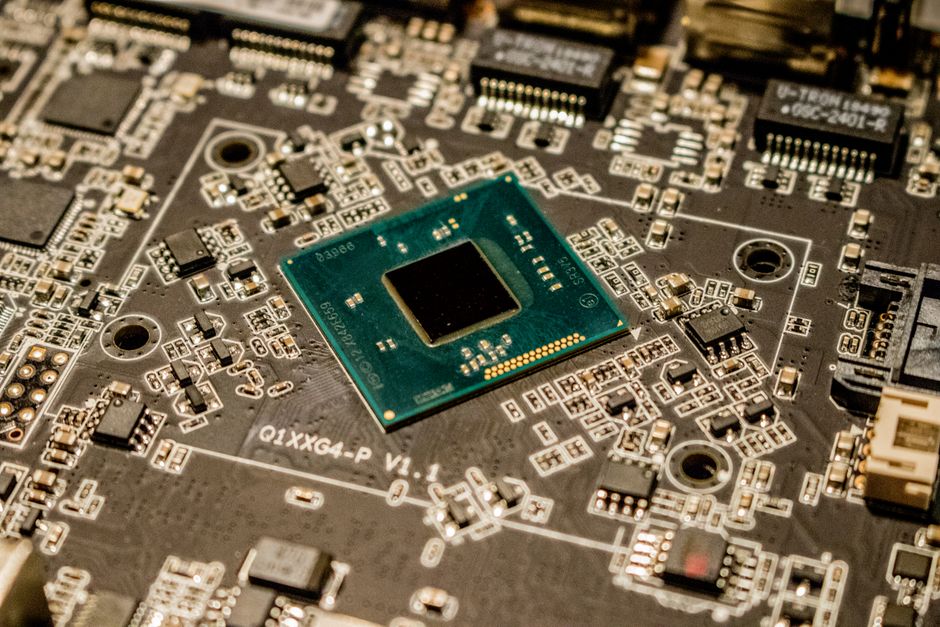
LongCat used a cluster of more than 50,000 Huawei Ascend 910B and 910C chips, running Huawei's CANN (Compute Architecture for Neural Networks) software stack instead of Nvidia's CUDA. Porting a training pipeline of this scale to a non-CUDA stack required custom engineering - including rewriting parts of the distributed training logic from scratch. The team completed the core 72-hour pretraining run with zero node failures, which signals genuine maturity in the domestic software stack.
Training covered 30+ trillion tokens of text. For LongCat-2.5, the team added a long-horizon reinforcement learning stage: synthetic environments were built to simulate complex software projects, and real agent failures were converted into reproducible training tasks.
Before the public reveal, LongCat-2.0 was quietly available on a developer marketplace under the name "Owl Alpha." It became one of the most-called models on several coding harnesses - without anyone knowing who made it. Performance was real enough to attract developers on its own merit.
What LongCat-2.5 can actually do
The clearest strength is software engineering. DeepSWE v1.1, which tests whether an AI can fix real bugs in real codebases, jumped from 9.7 (on LongCat-2.0) to 64.6 on the new version. PaperBench - reading and reasoning over academic papers - scores 82.1. BrowseComp, which involves navigating the web to research answers, reaches 91.9.
Vision is now first-class. The model can read screenshots, diagrams, charts, and user interfaces within its reasoning loop, not as a separate pipeline step. This matters for tasks like converting a design mockup into working code, reading a chart and extracting its numbers, or reviewing a UI for accessibility issues.
The 1 million-token context is genuine, achieved via a custom mechanism called LongCat Sparse Attention rather than naive full-attention over all tokens. For tasks requiring very long context, this is a practical capability, not a theoretical one.
What does this mean for you?
The key shift is not "here is a new AI model." It is: frontier AI development is no longer controlled by a small number of hardware suppliers.
For anyone who uses AI tools day to day: more choice is coming. The MIT-licensed LongCat-2.0 can be downloaded and run by any organization in any country, without depending on US cloud providers or export-compliant hardware. As more frontier-capable models emerge from non-English-first teams, coverage and quality for underrepresented languages tends to improve - because the builders' first language is not English.
For businesses thinking about AI infrastructure: the hardware bottleneck is weakening. A 1.7x latency gap versus Nvidia H200 matters for some real-time applications, but not for most batch tasks - reading documents, summarizing reports, running code review, or processing long-form content. If latency tolerance is a few seconds rather than milliseconds, the entire AI stack can now run on domestic infrastructure.
For the broader AI ecosystem: this is evidence that the frontier is becoming multi-polar. The hardware barriers that made training large models a US- and cloud-concentrated activity are eroding. That has implications for AI governance, for language coverage, and for who gets to shape what AI systems value and optimize for.
What are the real limits here?
Several things in the coverage are overstated, and it is worth naming them directly.
Performance is competitive, not dominant. The official release notes state that LongCat-2.5 is "not yet dominant on the frontier's hardest engineering tasks" compared to Claude-Opus-5. The benchmark gains from 2.0 to 2.5 are real, but most are coding-specific. General reasoning, instruction-following, and nuanced language tasks still favor the leading US models.
LongCat-2.5 is not open-source. The new version is API-only, with a commercial-first stance. Unlike the MIT-licensed LongCat-2.0 (which you can still download), you cannot get the weights for 2.5. This is a significant change in direction from the team's earlier approach.
The inference gap is real. Huawei Ascend hardware runs LongCat at roughly 1.7x the latency of Nvidia H200 at equivalent throughput. That gap has narrowed over time, but running this model at scale for millions of queries requires either more hardware or more tolerance for slower responses.
Transparency is limited. Meituan has not released a full independent technical report. Key benchmark numbers come from developers' own testing. Independent verification at this scale takes time.
What to watch next
China's AI chip self-sufficiency, by one estimate, has risen from about 12% (2023) to roughly 39% (2026), with projections near 55% by 2028. That trajectory matters more than any single model release. If domestic chips keep improving, the latency gap closes, and training entirely outside the Nvidia ecosystem becomes routine rather than remarkable.
Meituan's commercial-first shift for LongCat-2.5 suggests the team believes it has something worth monetizing. The next signal to watch: whether open weights return for a future version, and whether independent developers can verify the benchmark claims at scale.
FAQ
Is LongCat-2.5 better than ChatGPT or Claude?
It depends on the task. On agentic coding benchmarks (like DeepSWE and Terminal Bench), LongCat-2.5 is competitive with leading US models. On general reasoning and instruction-following, the developers themselves acknowledge it is not yet at the top. No single model is best across all tasks.
Can I download and use LongCat-2.5 for free?
Not yet. LongCat-2.5 is currently API-only through Meituan's platform. The earlier LongCat-2.0 is freely downloadable under an MIT license - you can use it commercially without restriction, but it lacks the multimodal and agentic improvements of 2.5.
What are Huawei Ascend chips, and why does it matter that China used them?
Huawei Ascend 910B/910C are domestically manufactured Chinese AI accelerators. Because the US has restricted China's access to Nvidia's H100, H200, and Blackwell chips since 2022, completing full pretraining on Ascend hardware demonstrates that frontier AI is achievable without US-controlled silicon. This is the first time it has been done at this scale.
Does this mean AI export controls are not working?
It depends on the goal. The controls added friction, cost, and time - China's AI chip self-sufficiency in 2023 was only 12%. By 2026 it reached roughly 39%. LongCat-2.0 is evidence that the controls slow development rather than stop it, and that the gap is closing faster than many expected.
What is a Mixture of Experts model, and why does it matter here?
A Mixture of Experts (MoE) model routes each input to a small subset of specialized sub-networks rather than running every parameter. LongCat-2.5 has 1.6 trillion total parameters but only about 48 billion activate per query. This is what allows it to run on cards with less than 80 GB of memory - making deployment on non-Nvidia hardware more practical.
Source(s): LongCat AI official release notes (Nov 2026); TechNode (Nov 2026); The Decoder (2026)
About the author
Dao Huy (Lucas) is a professional translator working across English, Vietnamese, Chinese, and French with over 7 years of experience. He follows the frontier of AI and language technology because those fields directly shape the tools and context in which translators work - and because understanding what AI can and cannot do is now a practical professional skill, not an optional extra.
If you need accurate, context-aware translation between English and Vietnamese - for technical documents, software products, or specialized content - Lucas offers English-Vietnamese and Chinese-Vietnamese translation and localization services. Request a quote at daohuy.com.

Bài viết bởi Đào Huy (Lucas), biên dịch viên và chuyên viên bản địa hóa tiếng Việt (Anh, Trung, Pháp sang Việt). See translation services →