
💡 On October 26, 2026, OpenAI announced that one of its AI reasoning models produced a formal disproof of the Exponential Time Hypothesis, a foundational assumption in computer science since 1999. The proof is machine-verified in Lean. Independent experts are reviewing it now - if it holds, hundreds of computational complexity results need rethinking.
- OpenAI's AI model generated a natural-language disproof of the Exponential Time Hypothesis (ETH) on October 16, 2026, and formalized it in the Lean proof assistant the next day
- ETH, formulated in 1999, asserts that hard problems like Boolean satisfiability cannot be solved faster than exponential time - this result directly challenges that assumption
- The Lean formalization provides machine-verified logical validity, but full community peer review has not yet been completed
- If the result holds, it affects hundreds of papers in graph algorithms, computational biology, database optimization, and computational geometry
- Honest caveat: the original ETH authors and MIT's Ryan Williams are reviewing it, but explicitly said their involvement should not be taken as certification
What Is the Exponential Time Hypothesis, and Why Did It Matter?
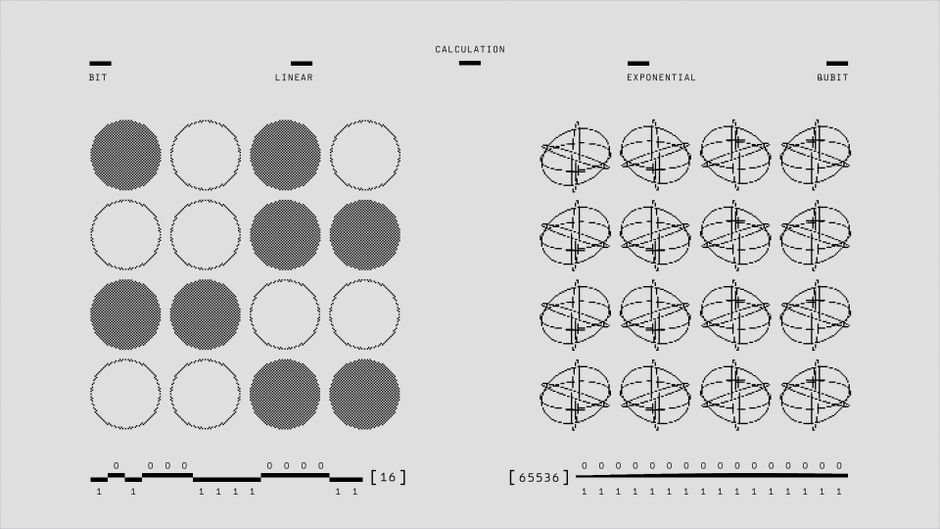
The Exponential Time Hypothesis is a conjecture formulated in 1999 by computer scientists Russell Impagliazzo and Ramamohan Paturi at UC San Diego. It states that certain problems, specifically k-SAT (a Boolean satisfiability variant), cannot be solved faster than exponential time in the worst case, regardless of the algorithm used.
The ETH was never proven - it was a working assumption. But it became one of the most heavily relied-upon foundations in theoretical computer science. Researchers used it as a benchmark: if a problem could be reduced to k-SAT, ETH meant you could stop searching for a fundamentally faster algorithm. Hundreds of papers in graph algorithms, computational biology, database query optimization, and computational geometry built their conclusions on ETH as a building block.
How Did an AI Produce This Proof?
On October 16, 2026, one of OpenAI's internal reasoning models generated a natural-language argument disproving ETH. The key claim: an algorithm exists that counts satisfying assignments of a k-CNF formula in subexponential time and polynomial space, which beats the limit ETH said was unavoidable. The Lean formalization was completed on October 17. Both the paper and the Lean proof are publicly available on GitHub.
The result was announced publicly on October 26 by Dan Roberts, who leads OpenAI's Frontiers team. OpenAI simultaneously announced two other theoretical results: a resolution of the local smoothing conjecture in harmonic analysis and a rigorous existence proof for Yang-Mills quantum field theories. OpenAI committed to releasing all raw data and contributed $5 million to the Simons Foundation for community workshops to scrutinize all three results.
What Does This Mean for Real-World Computing?
If the ETH disproof holds after full peer review, the practical effects would be significant but gradual. ETH underpins how algorithm designers think about scheduling, vehicle routing, chip design, network optimization, and computational biology. Current algorithms in these areas were built with ETH-shaped limits in mind. A valid disproof opens the theoretical door to faster approaches, even if building those new algorithms takes years of engineering work.
The practical impact would not arrive overnight. Theory to engineering is a long road. But a validated ETH disproof would mean we have been unnecessarily pessimistic about certain hard optimization problems, and that would redirect research attention in meaningful ways.
For translators, localization engineers, and language technology teams: NLP and machine translation pipelines rely on graph-based alignment and sequence optimization algorithms, several of which operate under ETH-adjacent assumptions. A validated disproof could, over years, open paths to faster exact algorithms for constrained NLP problems. The practical effect would be distant but real.
Does This Prove P Equals NP?
No. The P vs. NP problem asks whether every problem whose solution can be quickly verified can also be quickly solved. ETH is a separate, narrower conjecture about how much faster than exponential certain problems can be solved. Disproving ETH does not resolve P vs. NP.
Think of ETH as one specific lower-bound assumption in a large landscape of hardness conjectures. Removing it reshuffles part of the landscape but does not collapse the whole structure. Cryptography, which relies on the difficulty of factoring and discrete logarithm problems, would not be immediately affected by an ETH disproof.
The Honest Limits: What We Don't Know Yet
The Lean proof assistant checks that each logical step follows correctly from the previous one. What Lean cannot confirm is whether the problem was correctly encoded, whether the interpretation truly maps onto what ETH claims, or whether a subtle conceptual error lurks in the setup. Boundary-pushing results in complexity theory have a history of containing subtle errors that take months to surface.
Independent reviewers, including the original ETH authors Impagliazzo and Paturi plus MIT's Ryan Williams, have accepted OpenAI's request to review the result. They did so with a clear statement: their involvement should not be taken as certification of OpenAI's claims. They signed no non-disclosure agreements and are not paid. That independence is healthy, but it also means the result has not been endorsed. Treat it as promising and machine-verified, not yet consensus-accepted.
What Should You Watch for Next?
The key signal is whether the theoretical computer science community, working through the publicly available data and Lean proof, finds flaws or confirms the result over the coming months. OpenAI's three-proof announcement is the most ambitious public claim of AI-assisted mathematical discovery to date, and its reception will shape how seriously researchers treat AI as a partner in hard theoretical work.
Watch also for the Yang-Mills and local smoothing conjecture results. If all three hold up to scrutiny, it would mark a genuine shift in how AI systems contribute to frontier mathematics. AI systems have already matched human-level performance on standardized academic reasoning. The ETH result, if verified, would mark a qualitatively different level of contribution.
FAQ
What is the Exponential Time Hypothesis in plain terms?
ETH says that solving Boolean satisfiability problems cannot be done faster than exponential time in the worst case, regardless of the algorithm. OpenAI's AI claims to have found a method that beats that limit by solving a related problem in subexponential time. The formal argument has been machine-checked in Lean, but the broader community is still reviewing it.
Is a Lean proof the same as peer review?
No. Lean checks whether each step of a formal logical argument follows correctly from the previous ones. It does not check whether the problem was set up correctly, whether the encoding truly matches the ETH claim, or whether the conceptual framing is sound. Full peer review by the theoretical CS community is still ongoing.
Does disproving ETH break encryption?
No, not directly. Modern encryption relies on separate hardness assumptions, primarily the difficulty of factoring large numbers and discrete logarithm problems. Those are related to but distinct from ETH. An ETH disproof would require careful recheck of hardness reductions touching ETH-adjacent assumptions, but would not break current cryptography.
How long before real-world algorithms get faster?
Even if the ETH disproof is confirmed, translating it into practical algorithms takes years of engineering. Expect gradual improvements in specific domains like scheduling, vehicle routing, and chip design over years, not months. The theoretical door opens first, then practitioners build through it.
Source(s): Unite.AI - OpenAI's Three Mathematical Proofs (2026); MindStudio - ETH Disproof Explained (2026); Dealroom - OpenAI ETH Disproof and Simons Foundation Fund (2026)
About the author
Dao Huy (Lucas) is a professional translator working between English, Vietnamese, Chinese, and French, with more than seven years of experience in technical, legal, and technology translation. He follows developments in AI and computation not as a researcher but as a practitioner who translates complex technical language into clear, accurate text. The question of what computers can and cannot do efficiently is central to the tools translators and localization engineers rely on every day.
If your team needs precise English-Vietnamese translation for technical documentation, software localization, or AI and technology content, Lucas offers professional services with a quick turnaround. Request a quote at daohuy.com.

Bài viết bởi Đào Huy (Lucas), biên dịch viên và chuyên viên bản địa hóa tiếng Việt (Anh, Trung, Pháp sang Việt). See translation services →