
💡 Scientists at McGill University discovered that T cells can sense how stiff the tissue around them is, and use that physical signal to decide whether to become long-lived memory cells. Published in Nature Immunology on October 27, 2026, this adds a mechanical dimension to immunity that immunology has largely overlooked for decades.
- T cells detect tissue stiffness and use it to guide their fate: stiffer environments push them toward tissue-resident memory cells, the kind that guard a tissue for years.
- Organs like the liver, lung, and kidney are roughly 10 times stiffer than lymph nodes and spleen, which may partly explain why immune memory varies across tissues.
- In mice, T cells pre-exposed to stiff environments produced approximately twice as many tissue-resident memory cells after injection into live tissue.
- The effect involves shifts in three transcription factors: Runx3 and Hic1 increased, Klf2 decreased - the same pattern seen in naturally formed tissue-resident memory cells.
- Honest caveat: the molecular sensor for stiffness has not been identified yet; the study focused only on CD8-positive T cells; no human clinical trials exist.
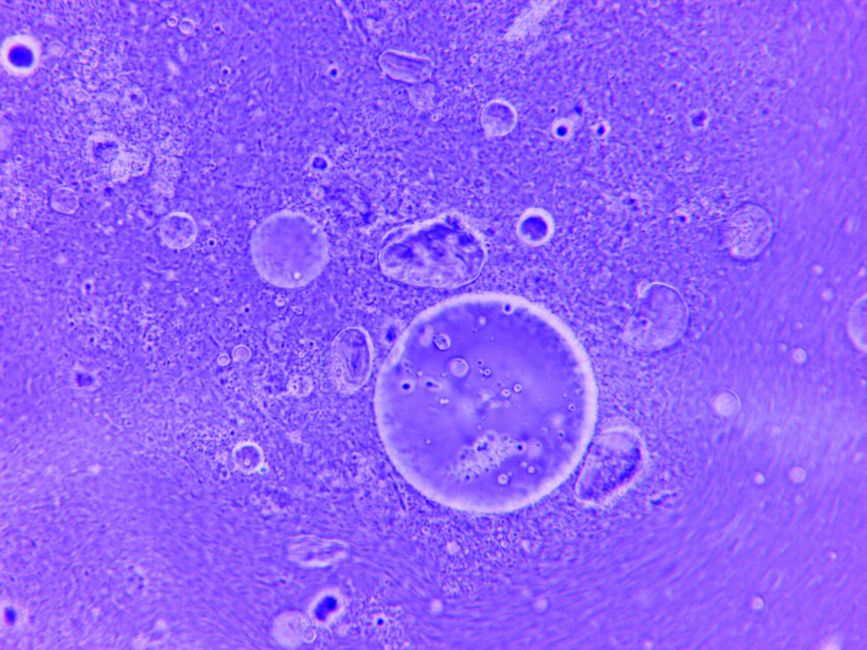
The rule of immunology that just changed
For decades, immunologists assumed T cells respond almost entirely to biochemical signals: cytokines, antigen presentation, co-stimulatory molecules. The physical properties of the tissue around them were not considered relevant. T cell mechanosensing - the idea that immune cells actively read the stiffness of their surroundings - belonged to cancer biology and developmental biology, not immunology.
That assumption broke in late October 2026. Professor Judith Mandl's lab at McGill University published results in Nature Immunology showing that when activated T cells encounter stiffer tissue, they are significantly more likely to develop into tissue-resident memory T cells (Trm cells). Trm cells are the immune system's local sentinels: they stay in a tissue - lung, liver, gut - for years, providing faster and stronger protection than circulating cells can.
How do T cells feel their environment?
The researchers placed human and mouse T cells in collagen gels engineered to mimic tissues of different stiffness. The pattern was consistent: the stiffer the gel, the more the cells shifted toward a Trm-like identity. The stiffer gels produced cells whose gene expression closely matched the profile of naturally formed resident-memory cells in real tissues.
Three transcription factors changed together: Runx3 and Hic1 increased, while Klf2 decreased. This is the same combination associated with resident memory across many organs. The cells also physically responded: they slowed down, changed shape, remodeled their nuclear envelopes, and paused their cell cycle - as if the physical environment was telling them to settle in.
What senses the stiffness? That question is open. The team ruled out several well-known mechanosensors: YAP/TAZ signaling, integrins, myosin contractility, and lamin A/C were all tested and eliminated. The actual molecular sensor is still unknown, and finding it is now the principal next research target.
What does this mean for cancer immunotherapy?
This is where T cell mechanosensing has some of its most direct implications. Solid tumors are mechanically stiff - often far stiffer than surrounding healthy tissue because of dense, cross-linked collagen scaffolding. Researchers designing cancer immunotherapies have long puzzled over why T cells struggle to persist in tumor microenvironments. The stiffness itself may be part of the answer: it drives cells toward a tissue-resident fate, which can mean they settle rather than kill and move on.
Understanding this physical signal could eventually let researchers pre-condition T cells used in cell therapy - priming them in stiff environments before injection so they arrive already committed to a tissue-resident identity. The mouse experiment showed this works in principle: pre-conditioned cells produced roughly twice as many tissue-resident memory cells compared to control cells one week after injection into live tissue.
There are also implications for autoimmune disease and transplant rejection. If stiff inflamed tissues drive T cells toward a resident-memory fate, that might help explain why immune activity becomes self-reinforcing in chronic inflammation: the tissue stiffens, which drives more T cells to reside and patrol, which sustains the inflammatory signal. Researchers studying tissue stiffness in other contexts - including a recent Yale study on cartilage repair in osteoarthritis - are now working on similar questions from different angles.
Does this explain why some vaccines protect certain tissues better than others?
It might contribute. Vaccines delivered into muscle (standard intramuscular injections) generate circulating T cells and some local resident memory. Mucosal vaccines - inhaled or delivered directly to lung or gut tissue - consistently generate stronger Trm responses in those organs. Stiffness differences between tissues may be part of why: resident memory formation appears to depend not just on what biochemical signals a T cell receives, but on the physical properties of where it settles. This research gives immunologists a new variable to test: can altering the mechanical environment at the injection site shift the balance toward better local protection?
The broader picture connects to aging as well. Fibrosis - the progressive stiffening of tissue with age or disease - is increasingly seen as a driver of immune dysregulation. The first randomized trial of senolytics showed that clearing senescent cells from stiff fibrotic liver tissue reversed fibrosis in nearly half of patients. Whether the immune behavior driven by mechanical stiffness connects to those outcomes is not yet known, but it is the right question to ask.
The honest limits: what we still do not know
The study focused exclusively on CD8-positive T cells - the cytotoxic "killer" arm of adaptive immunity. It is not yet clear whether CD4-positive helper T cells respond similarly, or whether regulatory T cells are also steered by mechanical signals. The mouse experiments are compelling, but animal models frequently fail to translate cleanly to humans.
The actual stiffness sensor in T cells has not been found. Without knowing the molecular mechanism, it is not possible to design drugs that target it. The study authors are careful to call this a "fundamental finding" - it changes how researchers will design experiments, not how doctors will treat patients, at least not yet. Anyone who reads a headline claiming this will soon change cancer treatment should treat that skeptically: the path from mechanism to therapy is long and frequently fails.
The research also does not tell us whether more Trm cells in a given tissue is always desirable. In an infected lung, yes. In an autoimmune joint or an organ undergoing transplant rejection, probably not. The signal is neutral; the context decides its value.
FAQ
What are tissue-resident memory T cells (Trm)?
Tissue-resident memory T cells are a specialized class of immune cells that take up long-term residence in a specific tissue - lung, liver, gut, skin - rather than circulating through the blood. They mount faster, stronger local responses to threats than circulating cells can, acting as sentinels stationed where infections or tumors are most likely to recur. Understanding what drives their formation is central to better vaccines and immunotherapies.
Does this mean stiff tissues always produce better immune memory?
Not exactly. The finding is that stiffness pushes T cells toward a tissue-resident fate. Whether that is beneficial depends entirely on context: in a virus-infected lung, more Trm cells is protective; in an autoimmune disease like rheumatoid arthritis, more resident T cells staying in inflamed joints may worsen the disease. Stiffness is a signal, not an instruction to get healthier.
Why did immunologists miss this for so long?
Mechanobiology - the study of how cells read physical forces - developed largely within cancer and developmental biology, not immunology. T cells move constantly through environments of very different stiffness, but the question of whether that movement shaped their identity was not a standard experimental variable. This paper argues that it should be, and points to the molecular profile changes as evidence it already has been happening in cells all along - we just were not looking for it.
Could this improve cancer immunotherapy in practice?
That is one of the most active hypotheses now. In principle, T cells used in adoptive cell therapy could be pre-conditioned in stiff artificial environments to increase their tendency to reside and persist in stiff tumor tissue. The mouse experiment showed roughly a twofold increase in resident-memory cells from stiff pre-conditioning. Whether that translates to better tumor control in humans is the next question - and no trials have started yet.
What is the molecular sensor that lets T cells detect stiffness?
It has not been identified. The researchers systematically ruled out several well-known mechanosensing pathways: YAP/TAZ, integrins, myosin contractility, and lamin A/C were all eliminated. Finding the actual sensor is the principal next step, and it matters because a known sensor is a potential drug target.
Source(s): ScienceDaily (2026); Medical Daily (2026); Nature Immunology, Vol. 27(8): 1708 (2026)
About the author
Dao Huy (Lucas) is a professional translator working across English, Vietnamese, Chinese, and French with over seven years of experience in technical, medical, and legal translation. He follows frontier science and medicine because understanding what research actually says - as opposed to what the press release says - is its own translation problem: from specialized language into clear, honest, usable insight. The idea that cells communicate through physical forces rather than chemical words is, in its way, a reminder that information does not always travel the way we expect.
If you need precise translation of medical documents, research summaries, regulatory filings, or technical materials between English and Vietnamese, Lucas offers professional translation and localization services. Request a quote at daohuy.com.
Écrit par Đào Huy (Lucas), traducteur vietnamien et spécialiste de la localisation (anglais, chinois et français vers le vietnamien). See translation services →