
💡 For the first time, a randomized controlled trial shows that senolytics - drugs designed to clear aging "zombie cells" - can reverse liver fibrosis in humans: 47% of treated patients improved by at least one fibrosis stage versus just 7% on placebo. That result shifts a key aging-science hypothesis out of animal models and into controlled human evidence for the first time.
- The double-blind trial randomized 31 MASH patients to dasatinib (100 mg) plus quercetin (1,000 mg) for three consecutive days per week over 21 weeks, conducted at Amsterdam University Medical Center.
- 47% of the treatment group achieved measurable liver fibrosis reversal versus 7% receiving placebo (P = 0.02) - a 40-percentage-point absolute difference.
- 53% of treated patients also achieved full MASH resolution versus 7% in the placebo group.
- Authors describe the results as "hypothesis-generating," not confirmatory: only 31 participants, wide confidence intervals, and 21 weeks is short for fibrosis biology.
- Adverse events were higher in the treatment arm (82% vs 43%), though most were mild - dasatinib is a cancer drug, not an over-the-counter supplement.
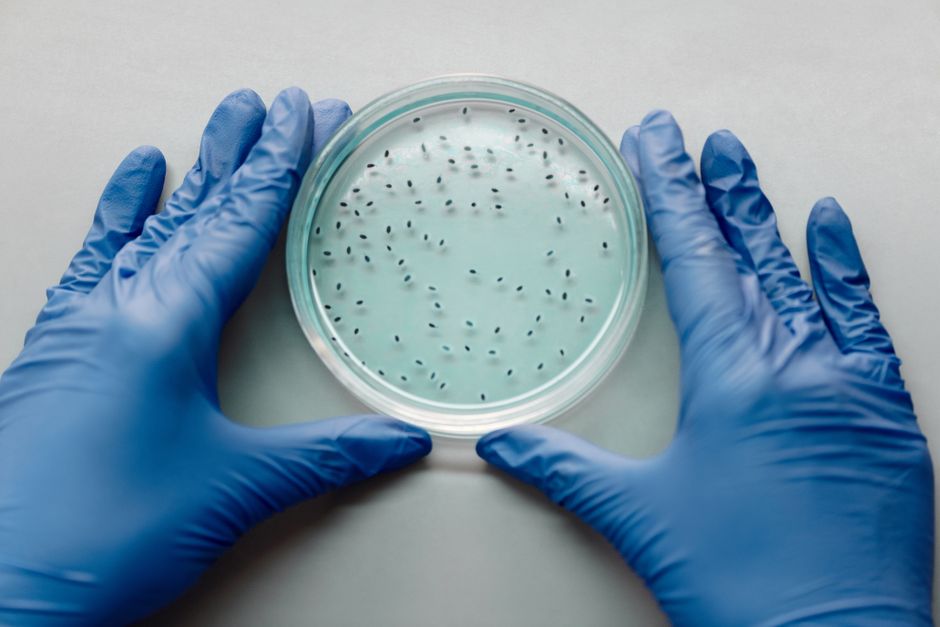
What are senescent cells and why do they accumulate?
Every cell carries a built-in division limit. After dividing a set number of times, a cell enters senescence: it stops reproducing but does not die. That pause is protective in younger bodies - it prevents damaged or potentially cancerous cells from spreading uncontrolled.
The problem arrives with age. Senescent cells accumulate faster than the immune system can clear them, and they do not stay quiet. They release a mix of inflammatory proteins and enzymes called the senescence-associated secretory phenotype (SASP): signals that degrade surrounding tissue, recruit immune cells, and nudge neighboring healthy cells toward senescence too. Researchers have found elevated senescent cell burdens in virtually every fibrotic disease they have looked: fatty liver, lung scarring, kidney decline, joint degeneration.
What did this trial actually test?
The study, published in Nature Metabolism in 2026 and available at the journal, enrolled patients with MASH - metabolic dysfunction-associated steatohepatitis, the inflammatory and fibrotic form of fatty liver disease. MASH is closely tied to obesity and type 2 diabetes, conditions where senescent cell burden is measurably elevated. Few treatments currently reverse fibrosis once it sets in.
Researchers gave 31 participants either a placebo or a combination of two existing drugs: dasatinib, a leukemia drug that blocks a key survival signal senescent cells depend on, and quercetin, a plant compound found in onions and apples that amplifies the effect through a different survival pathway. The protocol ran for three consecutive days per week, across three cycles over 21 weeks total - a pulsed design intended to clear senescent cells in waves rather than continuously.
What did the results show?
The primary endpoint was at least one stage of fibrosis improvement on paired liver biopsies taken before and after treatment. In the treatment arm, 47% of patients hit that mark. In the placebo arm, 7% did - roughly the rate expected from spontaneous fluctuation. The difference reached statistical significance (P = 0.02).
A secondary endpoint reinforced the picture: 53% of treated patients achieved full MASH resolution on biopsy versus 7% on placebo. The trial also measured senescent cell markers directly in liver tissue and confirmed that dasatinib plus quercetin reduced them. The mechanism is not just proposed - it was observed in the tissue samples.
What does this mean for you?
If you do not have MASH, this trial does not change what you should do tomorrow. But it confirms something aging researchers have argued for a decade: senescent cells are a real, modifiable target in living human tissue, not just in mouse models. That is harder to prove than it sounds, and it matters for the entire aging-intervention field.
For people with MASH or conditions driven by fibrosis and chronic inflammation, this is the first controlled signal that clearing senescent cells can physically reverse tissue damage. A 40-percentage-point gap in fibrosis reversal is large enough to be clinically meaningful if it holds up in larger trials.
For the broader question of whether senolytics might one day work in aging-related disease generally - the answer is increasingly "probably yes, but we are still early." This result joins a growing body of work on longevity interventions crossing from animals into human data, each controlled positive result moving the field one step forward.
For people thinking about quercetin supplements: the dose here was 1,000 mg, combined with a prescription cancer drug, in a specific pulsed protocol. Quercetin alone at typical over-the-counter doses (250-500 mg) has not been shown to clear senescent cells in humans. The combination and the precise protocol both matter.
What are the real limits of this result?
The authors are explicit: this is "proof-of-principle" evidence, not a treatment approval, and the result should be considered "hypothesis-generating rather than confirmatory pending replication in a larger trial." The trial enrolled only 31 people - a sample size that produces wide confidence intervals and leaves important questions unanswered. Twenty-one weeks is also a short window for fibrosis biology; whether improvements persist over months or years is unknown.
Adverse event rates were 82% in the treatment arm versus 43% on placebo. Most were mild (nausea, fatigue), but dasatinib carries real risks - it is a chemotherapy agent with known cardiac and immune effects, approved for leukemia, not liver disease. Any future senolytic protocol for metabolic disease would need a better safety profile to reach routine use.
MASH is also a condition where senescent cell accumulation is exceptionally high. Whether similar results would appear in other fibrotic diseases - or in people with lower senescent cell loads, such as healthy older adults - is not known from this trial. Extrapolating "senolytics reverse aging" from a fibrotic liver disease study overstates what the evidence actually supports. Research on the mechanisms behind why aging weakens muscle and tissue suggests senescent cell accumulation is relevant elsewhere, but each application needs its own evidence.
What comes next for senolytics?
The Amsterdam team and others have already identified the next trial targets. Pulmonary fibrosis (scar lung tissue) and chronic kidney disease are the leading candidates, as senescent cell accumulation has been confirmed in both. Larger, longer trials are needed to determine whether fibrosis improvements are durable and whether non-invasive blood markers - which this trial was not powered to detect changes in - can replace repeat liver biopsies as a monitoring tool.
The field is also working toward better senolytic compounds with improved safety profiles, and toward identifying which patients (by senescent cell burden or genetic markers) are most likely to respond. The quercetin-plus-dasatinib combination was chosen because both are already approved and relatively well-characterized; purpose-built senolytics may perform better.
FAQ
What are senolytics and how do they work?
Senolytics are drugs that selectively kill senescent cells - cells that have stopped dividing but refuse to die and instead release inflammatory signals that damage surrounding tissue. Different compounds block different survival pathways these cells depend on. The combination in this trial used dasatinib (which targets certain protein kinases that senescent cells upregulate to avoid death) and quercetin (a plant flavonoid that blocks a complementary survival mechanism). Together they clear senescent cells more completely than either drug alone.
Should I take quercetin supplements after reading this?
No. The protocol here used 1,000 mg of quercetin combined with 100 mg of dasatinib (a prescription cancer drug) in a clinical setting with liver biopsies to monitor response. Quercetin alone at over-the-counter doses has not been shown to clear senescent cells in humans. Dasatinib requires a prescription, carries significant side effects, and is not approved for aging or liver disease. Taking this combination outside a clinical trial is not supported by the evidence and carries real risk.
What is MASH and who is at risk?
MASH stands for metabolic dysfunction-associated steatohepatitis. It is the progressive, inflammatory form of fatty liver disease: fat accumulation combined with liver inflammation and fibrotic scarring. It is closely associated with obesity, type 2 diabetes, and metabolic syndrome. Globally, roughly 6-8% of adults have MASH, and it is one of the leading causes of cirrhosis and liver cancer in high-income countries. Until recently, no drug had reversed the fibrosis once it developed.
Is this the first human evidence for senolytics, or were there earlier studies?
Earlier studies showed senolytics could reduce senescent cell markers in blood and adipose tissue in small open-label trials - notably Mayo Clinic work from around 2019. But this 2026 Amsterdam trial is the first double-blind, randomized, placebo-controlled trial with a tissue biopsy endpoint. That design - where neither patients nor researchers know who got the drug, and improvement is measured in liver tissue rather than blood markers - is meaningfully stronger evidence than anything that came before it.
Which diseases might senolytics address beyond MASH?
Researchers are targeting conditions where elevated senescent cell burden has been confirmed in affected tissue. Pulmonary fibrosis and chronic kidney disease are the leading near-term trial candidates. Osteoarthritis, atherosclerosis, and age-related macular degeneration are also under investigation. The longer-term and more speculative use case - periodic senolytic treatment in older but otherwise healthy adults as a "healthspan" intervention - has not yet entered clinical trials and remains a hypothesis.
Source(s): Nature Metabolism (2026) - Senolytics dasatinib and quercetin in metabolic dysfunction-associated steatohepatitis: a proof-of-principle randomized, controlled trial. Amsterdam University Medical Center, 2023-2026. Independent write-up: Bioengineer.org.
About the author
Dao Huy (Lucas) is a professional translator working across English, Vietnamese, Chinese, and French, with over seven years of experience in scientific, medical, and technical translation. He follows the frontier of biology and medicine not as a researcher but as a translator: the gap between what scientists establish in journals and what reaches the public in plain language is exactly where translation matters most. Posts like this one aim to close that gap honestly, naming the limits alongside the findings.
If your work involves clinical, scientific, or regulatory translation - from clinical trial documents and medical device files to biomedical research summaries - Lucas offers English-Vietnamese and technical life-sciences translation services. Request a quote at daohuy.com.

Écrit par Đào Huy (Lucas), traducteur vietnamien et spécialiste de la localisation (anglais, chinois et français vers le vietnamien). See translation services →