
💡 On 5 October 2026, the Nobel Assembly awarded the Prize in Physiology or Medicine for optogenetics, a technique that uses light to switch specific neurons on or off in a living brain. Rooted in a protein found in green algae, it has already partially restored vision in blind patients and is reshaping how neuroscientists study depression and addiction.
- The prize goes to Karl Deisseroth (Stanford), Peter Hegemann (Humboldt), and Georg Nagel (Wurzburg) for discovering channelrhodopsin and engineering it into mammalian neurons.
- Channelrhodopsin, borrowed from single-celled green algae, acts as a light-sensitive ion channel: it opens within milliseconds when struck by blue light, triggering a precise electrical impulse in whichever cell carries it.
- The most advanced human use is vision restoration: a clinical trial has partially restored functional sight in retinitis pigmentosa patients using gene therapy and special goggles, with FDA review of one therapy now underway.
- For brain disorders such as depression, Parkinson's disease, and PTSD, optogenetics has produced striking results in animal research - no approved treatment for these conditions exists in humans yet.
- Honest caveat: most applications remain research tools, not therapies. Brain access requires gene delivery and implanted light sources, and the gap between mouse result and human clinic is large.
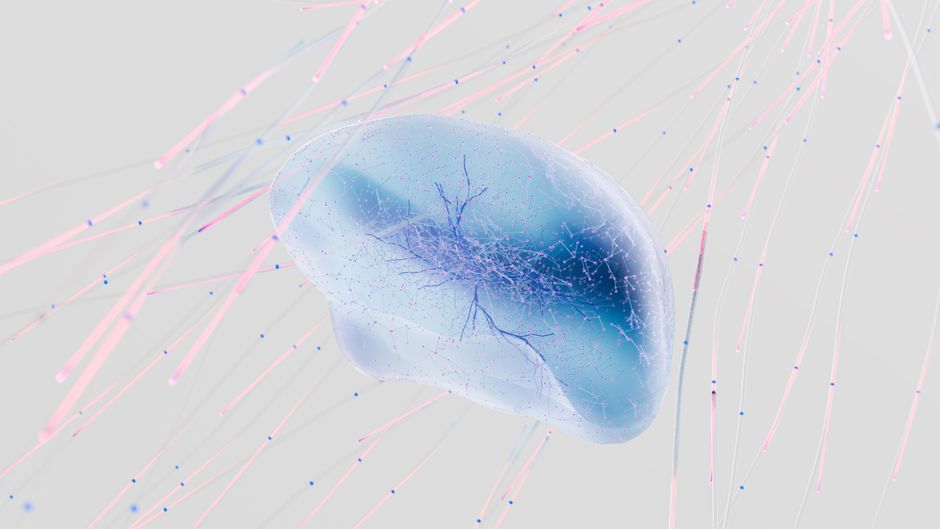
What actually happened: a Nobel for a light switch borrowed from algae
The 2026 Nobel Prize in Physiology or Medicine, announced on 5 October, went to three scientists whose work spans three decades. Peter Hegemann and Georg Nagel, working at the Max Planck Institute in the early 1990s, were puzzled by something simple: how does a single-celled green alga, Chlamydomonas reinhardtii, swim toward light? The answer was a protein called channelrhodopsin, a light-sensitive gate in the cell membrane. When photons hit it, it opens within milliseconds, letting positively charged ions flood in and generating an electrical signal.
Karl Deisseroth, then at Stanford, asked a different question: what if you inserted that algal protein into a mammalian neuron? His group demonstrated in 2005 that you could express channelrhodopsin-2 in rat neurons. By 2007, they were switching brain circuits on and off in living mice with millisecond precision. That combination - Hegemann and Nagel's molecular discovery, Deisseroth's engineering leap - is optogenetics. The prize of 12 million Swedish kronor (about $1.2 million) is shared equally among the three.
How does optogenetics work, in plain language?
The process has three steps. First, a viral vector delivers the channelrhodopsin gene into a targeted population of neurons. Second, those neurons express the light-sensitive protein in their membranes. Third, a thin fiber-optic thread - or, in the eye, specially designed goggles - delivers light to the target tissue. Blue light activates cells carrying channelrhodopsin-2. Yellow-orange light silences cells carrying halorhodopsin, a related inhibitory protein.
The result is specificity no drug can match. A drug diffuses through the brain and affects every receptor it encounters. A light pulse targets only the cells that express the introduced gene, at the exact moment chosen. This matters enormously for studying conditions like depression or addiction, where one small cluster of neurons in a specific circuit may drive an entire behavior pattern.
What is optogenetics doing in humans right now?
The eye is the most accessible part of the central nervous system - no skull to penetrate, no blood-brain barrier to cross - so vision restoration is where clinical translation is furthest along. In one landmark case, a patient in Paris with late-stage retinitis pigmentosa received an injection of an adeno-associated virus carrying ChrimsonR, a channelrhodopsin variant that responds to amber light. After months of training with special goggles that convert visual scenes into light pulses, the patient could locate objects, count items, and navigate a room. From complete functional blindness, any reliable object perception is significant.
A Phase 2b clinical trial by Nanoscope Therapeutics, the RESTORE trial, has since reported that 40 to 55 percent of treated eyes in late-stage retinitis pigmentosa improved visual acuity by at least three ETDRS lines. In September 2026, the FDA accepted the company's application for review - a formal step toward possible approval, not approval itself.
For deep brain disorders, results are more limited. Researchers have used optogenetics in animal models to reactivate suppressed memory circuits, ease Parkinson's-like tremors, and map which neurons drive addictive behavior in rodents. Several nascent trials are underway for PTSD and addiction, but none have published clinical benefit data in humans.
What does this mean for you if you or someone you care about has a brain disorder?
Be clear-eyed. The Nobel Prize recognizes a genuine scientific breakthrough, not a set of available treatments. If you have depression, Parkinson's disease, epilepsy, or PTSD, optogenetics is not a therapy you can access today. What it has done is more foundational: it has given neuroscientists a tool to ask precise questions about which circuits cause which symptoms.
That matters because most psychiatric drug development is based on imprecise hypotheses - roughly, this neurotransmitter seems involved, so adjust its levels. Optogenetics has shown that specific cell types within a circuit can matter far more than global neurotransmitter levels. That understanding will shape the next generation of drugs, even for people who will never have a light source near their brain.
If you have retinitis pigmentosa or another progressive retinal dystrophy, the clinical picture is more immediate. Trials are running, FDA review is underway, and the evidence is real. Partial vision restoration is not hypothetical - it has happened in patients. How memory and learning circuits function is one of the areas being mapped most actively with optogenetics, and those maps are the foundation for therapies that may reach clinical trials within this decade.
Where does the hype outrun the science?
Several places. First: the idea of controlling the brain with light sounds close to a complete, remote-controllable neural interface. It is not. Current optogenetics requires genetic modification of neurons, an implanted fiber-optic element, and physical proximity. It is invasive, targets one circuit at a time, and does not control an entire person's cognition any more than a pacemaker controls a personality.
Second: most dramatic brain results were in mice, often under highly controlled lab conditions. Nobel committee member Abdel El Manira stated explicitly that optogenetics does not help us understand what consciousness is - the prize-giving institution itself flagging the limits. Mouse models of depression and actual human depression share some circuit features, but they are not the same condition.
Third: gene delivery using viral vectors carries real risks - immune reactions, off-target expression, and the fact that, unlike a drug, you cannot easily reverse what you have introduced. Clinical translation requires safety studies that take years. The Nobel announcement prompted the predictable wave of headlines claiming cures are near. They are not. The science is genuine. The clinical pathway is active. A widely approved optogenetic treatment for a common brain disorder is still years away at minimum.
What to watch over the next few years
The FDA's decision on Nanoscope's retinitis pigmentosa application is one concrete milestone. Approval would make it the first optogenetic therapy cleared in the United States, setting a regulatory precedent for future applications. Researchers at several institutions are also testing whether circuit maps built with optogenetics can improve transcranial magnetic stimulation and deep brain stimulation protocols for Parkinson's and depression - bringing the insights without the gene delivery.
For anyone following how brain health changes with age, the circuit maps being built now are the key reference layer. As those maps improve across conditions and age groups, they will inform drug targets, device protocols, and eventually gene therapies. The Nobel was awarded for the key that opened the laboratory door. What comes through that door over the next decade is the more consequential story.
FAQ
What is channelrhodopsin and why does it come from algae?
Channelrhodopsin is a protein in a cell membrane that acts as a light-gated ion channel: the right wavelength of light opens it, ions flow through, and an electrical signal is triggered. Algae evolved it to steer toward or away from light. It suited neuroscience because it works in milliseconds, responds to a specific wavelength, and can be expressed in any cell type through standard gene delivery methods.
Has optogenetics actually treated a human patient?
For vision loss: yes. A patient in Paris with retinitis pigmentosa received optogenetic gene therapy and, using light-projecting goggles, regained partial functional vision - enough to recognize and locate objects. A Phase 2b trial reports 40 to 55 percent of treated eyes improved visual acuity by at least three lines. For brain disorders such as depression or Parkinson's: no approved human treatment exists. Research in humans for PTSD and addiction is underway but no clinical benefit data has been published yet.
Why is the eye easier to treat with optogenetics than the brain?
The eye is accessible: an injection delivers the viral vector directly to retinal cells with minimal surgery, and light can be projected through special goggles without implanting anything inside the eye. The brain requires getting a light source to a specific deep structure - the amygdala, the basal ganglia, the ventral tegmental area - which means more invasive surgery, more precise targeting, and more complex gene delivery. The blood-brain barrier adds another layer of difficulty.
Could optogenetics be used to manipulate people without their consent?
The realistic picture is far removed from that concern. Optogenetics requires genetic modification of specific neurons, physical implantation of a light source near the target tissue, and precise circuit-level targeting under medical supervision. It does not produce remote or whole-brain control. The technique is invasive and circuit-specific. Misuse concerns are reasonable to raise in policy discussions, but the current capabilities are nothing like broad behavior manipulation.
What does optogenetics have to do with language and communication?
The connection is indirect but real. Optogenetics is used in research to map how the brain processes and stores language, and how bilingual speakers encode different languages. As those maps improve, they will inform assistive communication devices for people with aphasia and therapies for the memory failures that disrupt language recall in aging and neurological disease - areas that connect directly to language technology and translation work.
Source(s): STAT News, Nobel Prize in Medicine 2026: Deisseroth, Hegemann, Nagel (October 2026); Sorbonne Universite, Optogenetic methods restore partial vision in blind patient; Neuroscience News, Optogenetics Pioneers Win 2026 Nobel Prize (October 2026)
About the author
Dao Huy (Lucas) is a professional translator working across English, Vietnamese, Chinese, and French, with over seven years of experience in technical, scientific, and general translation. He follows the frontier out of curiosity - not as a neuroscientist, but as someone who cares about how breakthroughs get communicated clearly across language and discipline boundaries. The Nobel for optogenetics is a reminder that a whole era of brain science can grow from one precise question: how does an alga sense light?
If you need to translate scientific, technical, or patent documents between English, Vietnamese, Chinese, or French, Lucas offers professional translation and software localization services. Request a quote at daohuy.com.

Écrit par Đào Huy (Lucas), traducteur vietnamien et spécialiste de la localisation (anglais, chinois et français vers le vietnamien). See translation services →