
NASA Clears Roman Space Telescope for Launch: What It Will Reveal
💡 On August 21, 2026, NASA cleared the Roman Space Telescope for launch on August 30, 2026. With a field of view 100 times wider than Hubble's, Roman will survey more than 2 billion galaxies and discover roughly 100,000 new planets. The biggest unsolved question in physics - dark energy - is about to get its best data yet.
- Roman's 300-megapixel Wide Field Instrument covers 100 times more sky per single shot than Hubble, at equal sharpness - turning what took Hubble 100 separate images into one exposure.
- In 5 years, Roman will survey more than 2 billion galaxies to map how dark energy drives cosmic acceleration, the biggest unsolved problem in physics.
- Roman expects to discover roughly 100,000 exoplanets, including cold, distant worlds and free-floating rogue planets that previous telescopes like Kepler and TESS couldn't detect.
- A 100-day commissioning period follows launch, with no science results until late 2026 at the earliest - and dark energy measurements will take years to become reliable.
- Roman complements, and does not replace, the James Webb Space Telescope: Webb studies individual targets in extreme depth; Roman maps the statistical structure of the entire observable universe.
What is the Roman Space Telescope?
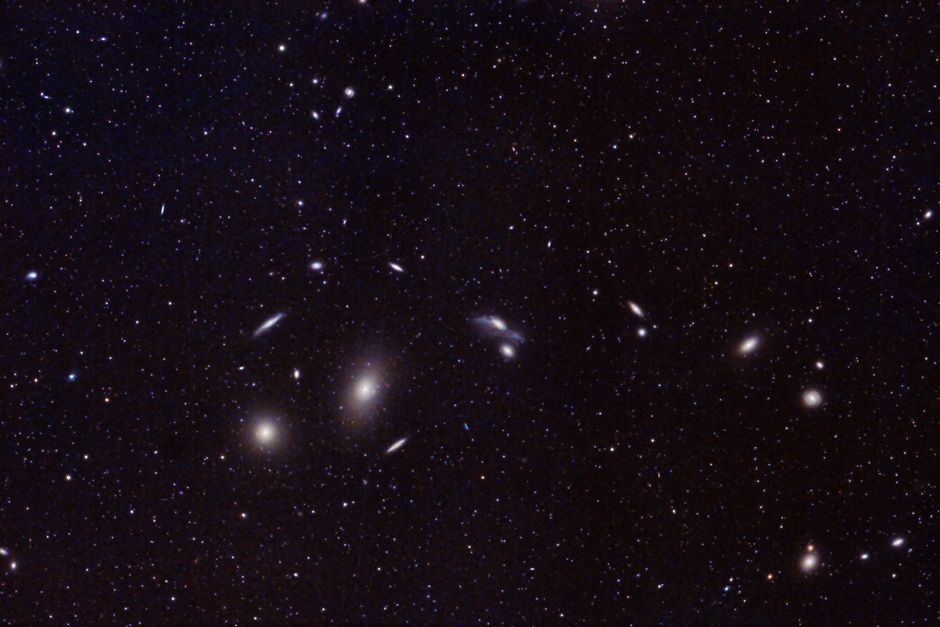
The Nancy Grace Roman Space Telescope is NASA's next flagship observatory, named after the agency's first chief astronomer - the scientist who championed the idea of a large telescope above Earth's atmosphere, a push that took decades and eventually became Hubble. Like Hubble, Roman carries a 2.4-meter primary mirror. The key difference is what sits behind it: a 300-megapixel Wide Field Instrument that photographs a patch of sky 100 times larger than Hubble can capture in a single exposure.
Roman is heading to the Sun-Earth L2 Lagrange point, roughly 1.5 million kilometres from Earth - the same orbital zone as the James Webb Space Telescope. Its primary mission runs 5 years, and the telescope will generate approximately 1 terabyte of data per day. NASA will use machine learning to extract discoveries from that flood of information.
A different job than Hubble and Webb
Hubble gave us extraordinary close-up portraits of individual nebulae, galaxies, and star systems. Webb pushed that further, peering deeper into cosmic history with a 6.5-meter mirror. Roman is doing something different: it is the wide-angle lens that maps the whole forest while Webb studies individual trees.
Consider the scale: a single Roman image would require more than 500,000 4K televisions to display at full resolution. Where Hubble needs 100 separate telescope pointings to cover a given patch of sky, Roman covers it in a single shot. To understand dark energy, you need statistics across billions of objects - Roman is built for exactly that scale. Recent instruments have already surprised us, showing how plasma whirlpools form on the Sun's surface; Roman will multiply unexpected discoveries by orders of magnitude.
What will Roman discover in its 5-year mission?
Three frontiers stand out. First, dark energy: by mapping the shapes and distances of billions of galaxies over cosmic time, Roman will track how dark energy is driving the universe's accelerating expansion. Current models conflict with each other in ways cosmologists cannot reconcile, and Roman's data should either sharpen or break those models.
Second, exoplanets: Roman will use two complementary detection methods. The transit method finds planets by detecting tiny dips in starlight as a planet crosses its host star. Gravitational microlensing finds planets - including free-floating ones without a host star - by detecting how gravity bends light from a background star. Together, these methods could yield roughly 100,000 new worlds, including the cold, outer-system planets that Kepler and TESS were never designed to find.
Third, Roman will test a coronagraph - a light-blocking device - to directly image a handful of nearby exoplanets. If the technology works at scale, it feeds directly into the design of the Habitable Worlds Observatory, the next telescope that will search for signs of life on Earth-like planets.
What this means for you: the universe's biggest question is changing
Dark energy is not an abstract academic puzzle. It governs the long-term fate of the cosmos - whether the universe expands forever, or eventually changes course. Right now, different measurement methods disagree on dark energy's strength in ways cosmologists cannot explain. Roman's billion-galaxy survey is the most direct route to resolving that tension with real data.
For anyone who has wondered whether we are alone: Roman will run the first true statistical census of planetary systems across the Milky Way, covering every orbital distance from close to the star all the way to the frozen outer reaches. The results will fundamentally change the numbers scientists use when calculating the odds of life elsewhere in the galaxy.
And for the purely curious: every wide-field space survey in history has found things nobody anticipated. The most consequential Roman discoveries will almost certainly be the ones nobody planned for.
What are the honest limits?
Roman has not launched yet. Every rocket launch carries risk, and the telescope will need a 100-day commissioning period after launch before science operations begin - no public results before late 2026. Dark energy measurements, the mission's flagship goal, will require years of accumulated observations before the statistical analysis becomes reliable. The dark energy mystery may be clarified, not necessarily solved.
Microlensing exoplanet detections are one-time events: the rare star-planet alignment that produces the signal will never repeat, so those planets cannot be followed up in detail. Roman also cannot observe at the same time as Webb - scheduling will always involve trade-offs. The 100,000-exoplanet figure is a projection. The actual number depends on what the Milky Way's planet population turns out to look like, which Roman is the first instrument capable of measuring properly.
FAQ
How is the Roman Space Telescope different from Hubble?
Hubble photographs small regions of the sky in extraordinary detail. Roman photographs a patch 100 times larger in a single shot with the same sharpness. Where Hubble needs 100 separate exposures to cover a given area, Roman does it in one. Roman is built for statistical breadth - mapping billions of objects across the universe - not individual close-ups.
When will we see the first results from Roman?
Launch is August 30, 2026, followed by a 100-day commissioning period. First science observations are expected to begin in late 2026. Meaningful dark energy results - the mission's primary science goal - require years of observations and will arrive in the late 2020s at the earliest.
Will Roman find Earth-like planets?
Roman will detect planets, not directly assess their habitability in most cases. Its microlensing technique excels at finding cold, distant planets but cannot measure their atmospheres. Roman's coronagraph will directly image a few nearby exoplanets - a first step toward the future Habitable Worlds Observatory that will eventually search for atmospheric signs of life on Earth-like worlds.
What is dark energy and why does Roman matter for it?
Dark energy is the name for the unknown force driving the accelerating expansion of the universe. It accounts for roughly 68% of the total energy content of the cosmos, yet we have no confirmed physical theory for what it is. Roman will measure it indirectly through billions of galaxy shapes and distances - the most statistically powerful technique currently available.
Why is the telescope named after Nancy Grace Roman?
Nancy Grace Roman served as NASA's first chief astronomer from 1959 to 1979. She was the driving force behind the proposal for a large space telescope - a decades-long effort that eventually became Hubble. Astronomers call her the "Mother of Hubble." The Roman telescope honours her foundational role in making space-based astronomy a reality.
Source(s): NASA Roman Space Telescope mission page (2026); The Planetary Society, Roman overview (2026); Forbes, 10 things to know about Roman before launch (2026)
About the author
Dao Huy (Lucas) is a professional translator working across English, Vietnamese, Chinese, and French, with over 7 years of experience in technical, scientific, and certified document translation. He tracks developments at the frontier of science and technology out of genuine curiosity - not as a researcher, but as someone whose job is to make complex ideas precise and clear across languages and cultures. A telescope that generates a terabyte of data per day is, in part, a translation challenge: turning raw numbers into discoveries that a global audience can understand.
If you need accurate English-Vietnamese or multilingual technical translation for scientific documents, research publications, or software localization, Lucas welcomes your project. Request a free quote at daohuy.com.
Written by Dao Huy (Lucas), Vietnamese translator & localization specialist (EN · ZH · FR → Vietnamese). See translation services →