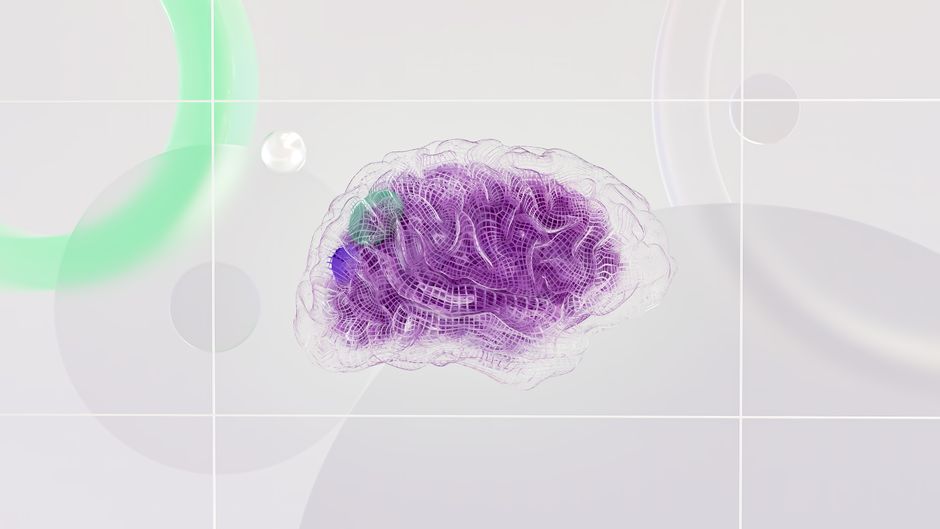
💡 A 2026 Nature study from Baylor College of Medicine found that the hippocampus keeps active brain language processing even under general anesthesia: it sorts words by grammatical category, predicts the next word in a sentence, and adapts to new sounds, all without any conscious awareness.
- Researchers recorded hundreds of hippocampal neurons in 7 epilepsy patients anesthetized with propofol, using Neuropixels probes in the human hippocampus for the first time under anesthesia.
- The hippocampus sorted spoken words by grammatical category (nouns, verbs, adjectives) and predicted the next word in spoken stories, all without conscious awareness.
- Neurons also improved their discrimination of sounds over time during unconsciousness, a sign of neural plasticity occurring without awareness.
- This does NOT mean patients are consciously hearing or suffering - the processing happens below the level of experience and left no memories.
- The study is small (7 patients, one anesthetic drug, one brain region) and needs replication with other anesthetics and larger samples.
What the Baylor Team Actually Did
In a study published in Nature (2026), neurosurgeon Sameer Sheth and lead author Vigi Katlowitz at Baylor College of Medicine did something that had never been done before: they placed Neuropixels probes directly in the hippocampus of patients undergoing epilepsy surgery while those patients were fully anesthetized with propofol.
Neuropixels probes are thin silicon devices that record electrical signals from hundreds of individual neurons at once. Used in animals for years, this was the first time the technology was deployed in the human hippocampus under full anesthesia. Seven patients took part, all undergoing planned epilepsy surgery where probes are already needed for clinical mapping.
Two experiments ran while the patients were unconscious. First: researchers played a repeated tone with occasional "oddball" sounds different from the pattern. Second: they played clips from educational videos and storytelling podcasts and recorded how individual neurons responded.
What Does Brain Language Processing Look Like Under Anesthesia?
The hippocampus was not quiet. Its neurons showed active brain language processing in real time, specifically the kind of processing researchers had assumed would require conscious awareness to perform.
When the oddball tones played, hippocampal neurons fired differently and that discrimination improved over time. The anesthetized brain was adapting to what it heard. In the language experiments, neurons arranged their activity to reflect word categories: patterns for nouns looked different from patterns for verbs, which looked different from adjectives. The activity also carried predictive signals - the brain was generating a forecast of what word should come next in the sentence.
Dr. Sheth summarized it directly: "Even when patients are fully anesthetized, their brains continue to analyze the world around them."
How Can a Brain Process Language Without Being Conscious?
The finding forces a re-examination of what consciousness actually does. The standard assumption held that complex operations like parsing grammar and predicting sequence required awareness. This study suggests the hippocampus runs those operations as a background process, the way the body regulates breathing without deliberate thought.
The hippocampus sits at a crossroads of sensory input and meaning-making. Its role in memory and new learning is well-established; this study shows it also tracks the statistical structure of incoming language automatically, grouping words and anticipating sequence, without conscious thought required. Language, it appears, is so deeply embedded in the brain that some of it runs on autopilot.
What Does This Mean for You?
If you are a patient scheduled for surgery: this finding does not mean you will remember conversations in the operating room or that you hear and understand them in a meaningful way. Memory formation requires additional steps that propofol and other anesthetics reliably disrupt. No patient in this study reported any awareness or memory of what was played during their procedure.
If you work with language, as a translator, writer, teacher, or communicator: the finding speaks to how deeply automatic language processing is in the brain, far below the level of deliberate thought. The speed at which a fluent reader or listener decodes grammar, anticipates the next word, and builds meaning is not a conscious act. That automatic layer is what makes fluency feel effortless. For anyone interested in how multilingualism shapes the brain, this study adds a compelling point: language is not just a skill the brain performs on command. It is something the brain does continuously, even in the dark.
For brain-computer interface and speech prosthetics researchers, the finding is practically relevant. If the hippocampus reliably encodes word categories and sentence sequence even under anesthesia, it could serve as a signal source for decoding intended speech in patients who cannot speak or move.
What This Does NOT Mean: The Honest Limits
Seven patients, one anesthetic drug (propofol), and one brain region (the hippocampus) are not enough to generalize broadly. We do not know whether findings hold under other common anesthetics such as sevoflurane, ketamine, or isoflurane. We do not know whether similar processing occurs during natural sleep, sedation, or coma. Only the hippocampus was studied; what the cortex, amygdala, or cortical language-network regions do under anesthesia remains an open question.
Processing, in the neural sense, is not the same as experience. The brain can track language without the person knowing anything. The study did not find that patients suffered, were distressed, or were aware. It found that one structure in the medial temporal lobe kept running its automatic routines.
Headlines framing this as "patients hear everything during surgery" or implying anesthesia does not work are not what the data show. The science is more precise, and more interesting, than that.
What to Watch Next in Consciousness Research
This study joins a wave of work mapping how language is physically distributed in the brain. Research into the brain's language network has accelerated in recent years, and studies like this one push the central question: what does consciousness actually add to language? The next step: does the hippocampus send its language signals to other areas while the patient is unconscious, or does the signal stay local? Can language processing be detected reliably in disorders of consciousness, coma, or vegetative state where outer signs of awareness are absent? Those questions have real clinical stakes for assessing patients who cannot communicate.
FAQ
Does the brain hear and understand everything said while I am under general anesthesia?
No. The hippocampus processes language signals automatically, but that is not the same as hearing and understanding consciously. No patient in this study reported awareness or memory of what was played during surgery. Processing happened below the threshold of experience, and anesthesia blocked memory formation entirely.
Is it stressful or harmful that the brain keeps processing language during surgery?
This study found no evidence of harm or distress. The processing was automatic and left no memories. The researchers found no signs of distress in the neural patterns they recorded. That said, the study was small and focused only on propofol, so it is not a complete picture of all surgical scenarios.
What is the hippocampus, and why was it the focus of this study?
The hippocampus is a curved structure in the medial temporal lobe, critical for forming new memories and learning. It was chosen because it is accessible during epilepsy surgery and because prior animal work had shown it responds to language. This was the first time Neuropixels probes were used there in anesthetized humans.
Could this change how brain-computer interfaces work?
Potentially, yes. If the hippocampus reliably encodes word categories and sentence sequence even under anesthesia, it could serve as a signal source for speech-decoding devices in patients who cannot speak or move. The researchers explicitly mention brain-computer interfaces and speech prosthetics as a direction the work points toward.
Does this mean anesthesia is not working properly?
No. Anesthesia blocks conscious awareness and memory formation, which is exactly what it is designed to do. What this study found is that some automatic language processing continues at the neural level below consciousness. The patients were not aware, did not feel pain, and did not form memories. The anesthesia worked as intended.
Source(s): Katlowitz et al., "Plasticity and language in the anaesthetised human hippocampus," Nature vol. 654 (2026); ScienceAlert (2026)
About the author
Dao Huy (Lucas) is a professional translator working across English, Vietnamese, Chinese, and French with over 7 years of experience. Language has always struck him as something stranger and more automatic than it looks on the surface. This study, showing the hippocampus sorting grammar while the person is completely unconscious, is a vivid reminder: fluency is not just a skill the mind wields. It is what the brain does by default, at every waking moment, and apparently beyond.
Lucas offers English-Vietnamese, technical, IP, and software localization services. If you need accurate, context-aware translation or tech localization, reach out for a quote.

Written by Dao Huy (Lucas), Vietnamese translator and localization specialist (English, Chinese and French into Vietnamese). See translation services →