
Why Does Time Feel Faster as You Get Older?
💡 Time feels faster with age mainly because your brain measures a stretch of life by how many new memories it laid down, and adult routine creates far fewer novel moments than childhood did. Sameness compresses memory, so recent years feel thin and quick. The good news: add real novelty and time fills out again.
- Memory, not the clock, drives the feeling. Fewer new experiences make a year feel thinner and faster in hindsight.
- The popular "each year is a smaller fraction of your life" idea (Paul Janet, 1877) is intuitive but weakly supported on its own.
- A busy day flies while you live it yet feels long in memory. This prospective versus retrospective split explains much of the illusion.
- You can slow it down: seek novelty, learn something genuinely hard, break your routine, travel, and record what happens.
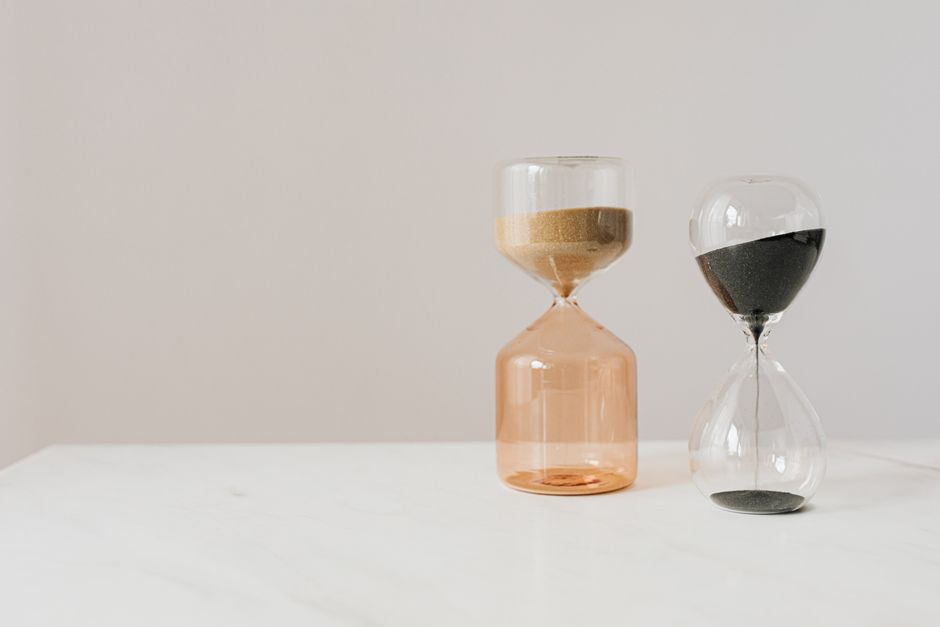
The short answer: your brain counts memories, not minutes
When you ask why time feels faster as you get older, the most reliable answer is about memory. Your sense of how long a period lasted is mostly retrospective: you judge it afterward by how much it left behind. Ignacio Polti, a neuroscientist at the Kavli Institute for Systems Neuroscience, puts it plainly: the brain uses the memories and details from a period to estimate how long it was. Felt duration rides on how memory encodes those details.
Childhood is dense with firsts, so it leaves thick, detailed memories. Adult life settles into routine, and familiar days barely register. Fewer new marks means a thinner memory of the year, which your brain reads as "that went quickly."
Why does childhood feel so long?
A single summer as a child can feel endless in hindsight, and novelty is why. Psychologist Betsy Holmberg notes that young brains are wide open to learning, taking in far more from the outside world before habits harden. Every first day of school, first friendship and first trip is encoded in detail.
By adulthood, much of daily life is prediction rather than discovery. Your brain has seen this commute, this task and this evening before, so it stops writing them down in full. The clock has not changed; the record has thinned.
Is it just that a year is a smaller slice of your life?
This is the famous proportional theory. In 1877 the French philosopher Paul Janet proposed that a period feels long or short in proportion to your whole life so far. William James popularized it: a year is one tenth of a ten-year-old's life but only one fiftieth of a fifty-year-old's, so it seems to shrink.
The idea is neat, and it is part of why the chart above feels intuitive. But on its own it is weakly supported: careful reviews, including a 2022 reassessment of Janet's law in the journal Timing and Time Perception, find it does not cleanly predict how people actually judge time. Memory and novelty do a better job of explaining the effect.
In the moment versus in memory: the split that fools us
Part of the confusion is that time runs at two speeds. Prospective time is what you feel while it happens; retrospective time is what you feel looking back. They often disagree, much like the stretched time people report in a deep state of flow.
A one-week holiday packed with new things flies by while you are there, yet feels long and full weeks later, because it left so many memories. A three-hour wait at an airport drags in the moment but shrinks to almost nothing in memory. Routine adulthood is the airport, repeated: easy to pass, hard to remember.
| Makes time feel fast | Makes time feel slow |
|---|---|
| Routine and repetition | Novelty and first-times |
| Passive scrolling | Active, effortful learning |
| The same few places | New places and travel |
| Blurred, unrecorded days | Journaling, photos, marked moments |
How can you slow time down?
You cannot change the clock, but you can change the record, and the felt speed of life tracks the record. The lever is novelty plus attention.
- Learn something genuinely hard. A new language, instrument or craft forces your brain back into detailed encoding. Picking up a language through comprehensible input is one of the richest sources of new memories there is.
- Break the template. Take a different route, cook an unfamiliar dish, meet new people, rearrange your week.
- Travel, even locally. New places generate first-times cheaply.
- Record your life. A few lines of journaling or a daily photo give memory something to hold, so the year reads as full rather than blank.
- Be present. Attention is what turns an event into a memory; distraction lets days pass unwritten.
None of this stops aging, but it changes how a year feels when you look back on it, which is where the sense of speed really lives.
FAQ
Does time actually speed up, or does it just feel that way?
It only feels that way. A clock ticks at the same rate at every age. What changes is your perception, which depends on how many new memories a period leaves; sparse memories make recent years feel quick.
At what age does time start to feel faster?
There is no single switch. The feeling builds gradually as adult life grows more routine, and many people first notice it in their twenties or thirties. It reflects lifestyle and novelty more than a fixed birthday.
Can learning a new language really make time feel slower?
Yes, in hindsight. Effortful, novel learning creates richer, more detailed memories, and a period full of them feels fuller and longer when you look back. Using the language with real people adds even more novelty.
Why do holidays feel short while happening but long in memory?
Because time has two speeds. Engaged, enjoyable time passes quickly in the moment, while the many new memories it created make it feel long afterward.
Is the "fraction of your life" theory proven?
No. The proportional idea from Paul Janet in 1877 is intuitive but has weak direct experimental support. Memory and novelty explain the effect more convincingly than arithmetic alone.
Source: ScienceNorway (Kavli Institute for Systems Neuroscience), Psychology Today, a 2022 reassessment of Janet's law in Timing and Time Perception.
About the author
I am Dao Huy (Lucas), a professional translator working across English, Vietnamese, Chinese and French for more than seven years. I write these explainers out of plain curiosity, and this one is close to home: my day is spent noticing how differently a single idea lands in four languages, which is exactly the kind of attention that makes an ordinary afternoon memorable.
If you ever need English and Vietnamese translation, certified document translation or multilingual localization done with that same care, I would be glad to help. You can read more or ask for a quote at daohuy.com.
Written by Dao Huy (Lucas), Vietnamese translator & localization specialist (EN · ZH · FR → Vietnamese). See translation services →