
Roman Space Telescope Launches: What 100x Wider Than Hubble Reveals
💡 NASA's Roman Space Telescope launched on August 30, 2026, aboard a SpaceX Falcon Heavy rocket and is now traveling to its station 1.5 million kilometres from Earth. In a single exposure, it captures 100 times more sky than Hubble, opening a new era of large-scale cosmic surveys aimed at dark energy, dark matter, and thousands of new worlds.
- The Roman Space Telescope launched August 30, 2026 on a SpaceX Falcon Heavy from Kennedy Space Center, now traveling to the L2 orbit 1.5 million km from Earth.
- Its 300-megapixel camera captures 100 times more sky per single exposure than Hubble, with survey speeds estimated at 100 to 1,500 times faster.
- Three core goals: mapping dark energy (via 80,000 supernovae and 1 billion galaxies), studying dark matter structure, and cataloguing up to 200,000 exoplanet candidates.
- First science images are expected in early 2027; the primary mission runs five years.
- Honest caveat: Roman will narrow dark energy theories, not solve them outright, and only a fraction of planet candidates will be confirmed.
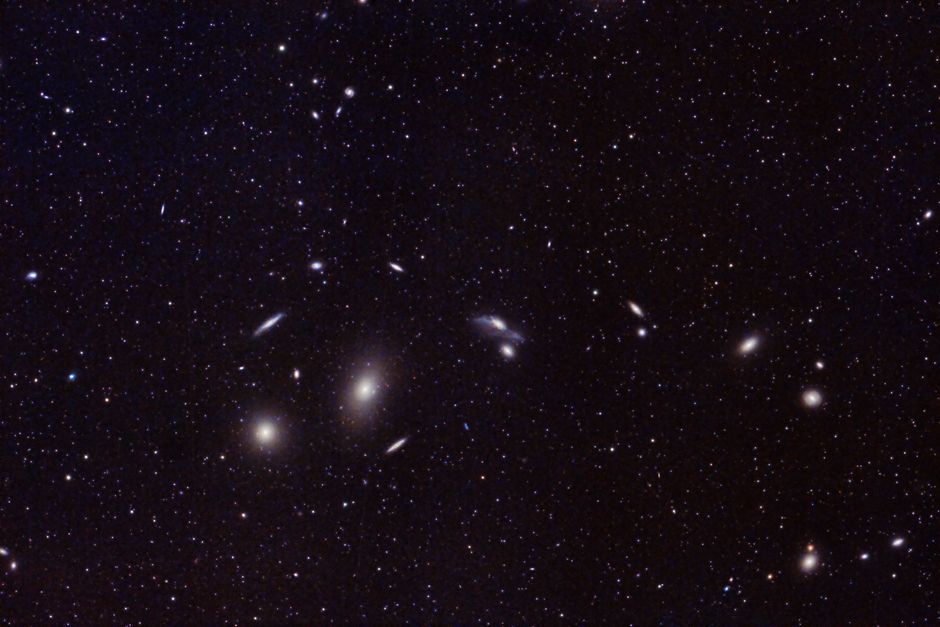
What Just Happened: The Roman Launch
On August 30, 2026, at 7:26 a.m. Eastern time, a SpaceX Falcon Heavy rocket lifted off from Kennedy Space Center's Launch Complex 39A, carrying the Roman Space Telescope on a three-month journey to the second Sun-Earth Lagrange point. That is a gravitationally stable position about 1.5 million kilometres from Earth, where the telescope will settle alongside the James Webb Space Telescope and begin a five-year survey of the universe.
Roman is a NASA flagship mission: the category reserved for the agency's highest-priority observatories, built over years and designed to answer questions that no smaller instrument can. It carries an 18-detector, 300-megapixel infrared camera built for rapid wide-field scanning. After arriving and completing a 90-day commissioning phase, it will begin returning 1.4 terabytes of data per day.
How Does Roman Compare to Hubble and Webb?
Hubble and Webb excel at looking deep into narrow patches of sky. Roman is designed to do the opposite: survey wide. One Roman exposure covers roughly 100 Hubble fields of view simultaneously. That translates to survey speeds that NASA estimates at around 1,000 times faster than Hubble for equivalent sky coverage.
| Capability | Hubble | Webb (JWST) | Roman |
|---|---|---|---|
| Sky per exposure (relative) | 1x | ~1x | 100x |
| Survey speed vs Hubble | 1x | ~1x | 100-1,500x |
| Sensitivity to faint objects | High | Very high | Moderate |
| Wavelength range | UV + optical | Near to mid infrared | Optical + near-IR |
Webb, launched in 2021, remains far more sensitive for studying individual distant objects. Roman operates at optical and near-infrared wavelengths - complementing Webb, not replacing it. Webb reads individual words; Roman reads entire chapters at once.
What Will Roman Actually Hunt For?
Three target areas define the mission:
- Dark energy: Roman will catch approximately 80,000 Type Ia supernovae - the "standard candles" astronomers use to measure cosmic distances - and map over 1 billion galaxies. These measurements will test the leading models of the force driving the accelerating expansion of the universe.
- Dark matter: By mapping how galaxies cluster across cosmic time, Roman traces the invisible gravitational structure that shapes large-scale matter distribution.
- Exoplanets: Roman should identify 60,000 to 200,000 planet candidates via transit detection and thousands more via gravitational microlensing. It may also spot hundreds of rogue planets drifting through space with no host star.
What This Means for You
Roman will not change your morning routine. But it directly attacks some of the oldest open questions in science.
Dark energy is the label physicists give to the unknown force driving the universe's accelerating expansion. It is estimated to make up about 68% of the total energy content of the cosmos. Every scenario for the universe's long-term future - whether it expands forever, slowly cools, or tears apart in a "big rip" - depends on understanding what dark energy actually is. Roman is the most capable wide-field instrument humanity has ever launched to constrain those scenarios.
On worlds beyond our solar system: the Roman Space Telescope may confirm the first exomoon, detect planets in habitable zones of distant stars, and map a population of rogue planets we have barely glimpsed before. Understanding how common Earth-like conditions are in the galaxy is one of the most consequential long-term questions in science. Roman's exoplanet survey is the largest ever attempted from space.
The raw data - 1.4 terabytes per day - will be released publicly and analyzed by machine learning pipelines and citizen scientists. This is not a closed experiment. Anyone curious enough can engage with the results as they emerge.
What Are the Honest Limits?
Roman's capabilities are genuine, but some of the headlines deserve scrutiny.
Roman will not resolve the dark energy mystery during its primary mission. It will narrow the allowed parameter space for models of dark energy - that is genuinely valuable progress, but it is incremental science, not a single eureka discovery.
The 60,000 to 200,000 exoplanet candidate numbers are projections based on mission design models. Only a fraction will be confirmed through follow-up observations with other telescopes. Roman does not have the spectroscopic capability to study exoplanet atmospheres. That detailed work stays with Webb and future instruments.
Roman also carries an experimental coronagraph for blocking starlight to directly image planets. This is a technology demonstration for future missions, not a current science instrument. Roman is a survey machine, not the telescope that will photograph another Earth.
What to Watch Over the Next Six Months
Roman is now in transit to L2, arriving roughly in late November 2026. A 90-day commissioning phase follows. The first science images are planned for early 2027.
Watch the NASA Roman mission page and the Space Telescope Science Institute for first-light announcements. Instrument calibration data in late 2026 will already indicate whether performance matches design specifications.
Roman's work connects to other efforts probing the universe's invisible components. Ground-based experiments like the LUX-ZEPLIN detector are tackling dark matter detection from a completely different angle - and both lines of evidence will need to converge for a complete picture.
FAQ
What is the Roman Space Telescope and why does it matter?
The Nancy Grace Roman Space Telescope is NASA's newest flagship observatory, launched August 30, 2026. It captures 100 times more sky per exposure than Hubble and will survey over 1 billion galaxies, detect up to 200,000 exoplanet candidates, and measure dark energy more precisely than any prior instrument. It is the most capable wide-field space telescope ever built.
How is Roman different from the James Webb Space Telescope?
Webb is extremely sensitive but surveys a narrow patch of sky at a time. Roman covers roughly 100 times more sky per shot. Webb excels at studying individual distant objects in deep infrared detail; Roman maps the large-scale structure of the universe rapidly. The two telescopes are complementary: Webb goes deep, Roman goes wide.
When will Roman send back its first images?
Roman launched August 30, 2026 and is on a three-month journey to its L2 orbit. A 90-day commissioning phase follows arrival. First science images are expected in early 2027, roughly six months after launch.
Will Roman actually solve the dark energy mystery?
Not definitively, and not quickly. Roman will measure dark energy's influence far more precisely than any previous survey, narrowing the range of viable models significantly. But resolving what dark energy fundamentally is requires combining Roman data with results from other observatories over many years. The mission is a major step, not a final answer.
What are rogue planets and why is Roman looking for them?
Rogue planets drift through space without orbiting any star, ejected during the chaotic early stages of planetary system formation. Roman can detect them via gravitational microlensing, where the planet bends light from a background star. Finding hundreds of them helps astronomers understand how violent - or stable - planetary formation tends to be across the galaxy.
Source(s): NASA (2026), The Planetary Society (2026)
About the author
Dao Huy (Lucas) is a professional translator working across English, Vietnamese, Chinese, and French, with over seven years of experience in technical, legal, and scientific documents. He follows frontier science and technology out of genuine curiosity, because understanding how the world is changing is part of communicating clearly about it. The Roman launch is a reminder that the most consequential discoveries often require patient translation: turning terabytes of telescope data into meaning a human can actually use.
Lucas offers English-Vietnamese translation for technical, scientific, and official documents, as well as software and technology localization. If you need a reliable quote, visit daohuy.com.
Written by Dao Huy (Lucas), Vietnamese translator & localization specialist (EN · ZH · FR → Vietnamese). See translation services →