
Lancet 2026: Lifestyle Program Boosts Cognition by 55%
💡 A 2-year structured lifestyle program - supervised exercise, personalised nutrition, cognitive training and social coaching - produced 55% greater improvement in global cognition than general health advice alone, in a Lancet randomised controlled trial of 1,065 older adults across 11 countries. How behaviour change is supported, not just which behaviours are targeted, is critical for protecting brain health as you age.
- A structured, coached lifestyle program improved global cognition 55% more than a flexible self-guided program over 2 years (1,065 adults, The Lancet, July 2026).
- Four interlocking components drove the result: supervised exercise (including salsa and tango), adapted MIND diet counselling, computerised cognitive training, and 38 group meetings for social support.
- The trial was conducted across 11 Latin American countries - the largest brain-health RCT ever run in the Global South - with culturally adapted activities and locally available foods.
- Benefits were consistent across age, education level, ethnicity and genetic Alzheimer's risk, suggesting broad applicability.
- Key caveat: the study measured cognitive test scores, not actual dementia incidence. Longer follow-up is still needed to confirm clinical benefit.
- Journal
- The Lancet
- Type
- Single-blind, multicentre, randomised controlled trial
- Sample
- 1,065 adults aged 60-77, 12 sites across 11 Latin American countries
- Published
- July 2026
- Institution
- Fleni neurological institute, Buenos Aires, Argentina (lead: Lucia Crivelli, Ph.D.)
This article is for general informational purposes only and does not constitute medical or clinical advice. If you have concerns about memory or cognitive health, please speak with a qualified healthcare professional about your individual situation.
What the trial found and how it was designed
In July 2026, researchers published what many experts are calling the most consequential dementia-prevention trial ever conducted outside Europe and North America. The LatAm-FINGERS study - the Latin American Initiative for Lifestyle Intervention to Prevent Cognitive Decline - enrolled 1,065 older adults at elevated risk for dementia across 12 sites in 11 countries: Argentina, Bolivia, Brazil, Chile, Colombia, Costa Rica, the Dominican Republic, Ecuador, Mexico, Peru and Uruguay.
After two years, participants who received a structured, coached lifestyle program showed 55% greater improvement on a composite measure of global cognition compared to those who followed a more flexible, self-guided approach. The gains appeared in memory, executive function (planning and decision-making) and processing speed alike.
The study was presented on July 13, 2026 at the Alzheimer's Association International Conference and simultaneously published in The Lancet. It is the first large-scale brain health RCT designed specifically for Latin American communities, accounting for different cultures, languages and ways of life.
The trial was a single-blind, multicentre, randomised controlled trial - the gold standard of clinical research. Participants were randomly assigned to one of two groups, and the researchers assessing cognitive outcomes did not know which group each participant belonged to, reducing measurement bias. Participants were adults aged 60-77 at elevated risk for dementia based on cardiovascular risk markers, subjective memory concerns or sub-optimal lifestyle indicators. Retention was strong: more than 80% completed the full 2-year programme - an unusually high rate for a demanding behavioural intervention.
LatAm-FINGERS builds on the Finnish FINGER trial (2015) and the U.S. POINTER trial. Together, all three now show that a structured multi-component lifestyle programme consistently outperforms general health advice across very different cultural contexts.
What did the structured programme actually involve?
The Systematic Lifestyle Intervention (SLI), assigned to 539 participants, had four interlocking components:
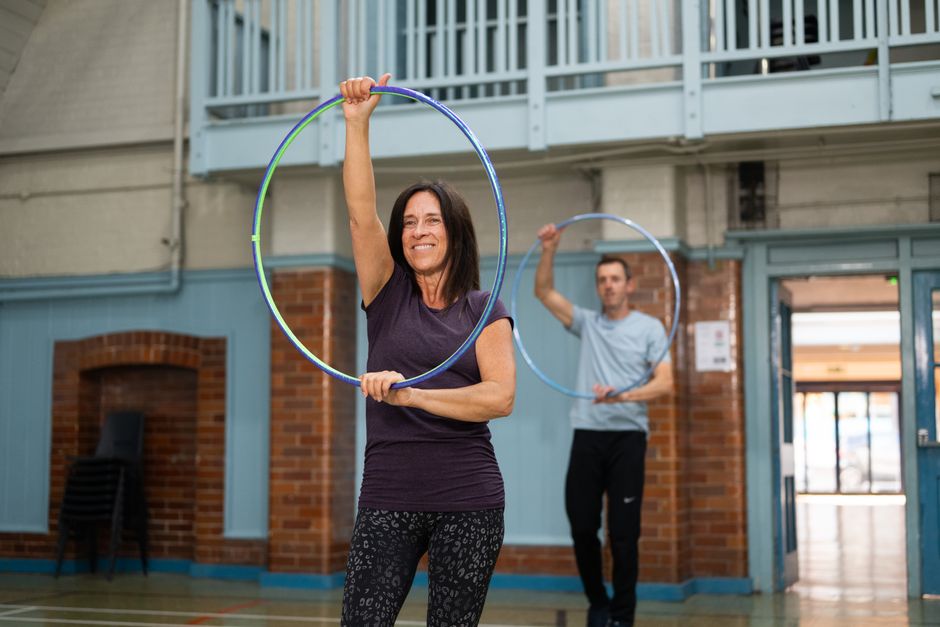
Exercise: Supervised physical activity four days per week, adapted to local culture. In several countries, this included salsa and tango - not as novelties, but as legitimate aerobic and coordination activities with deep community roots. Research consistently shows aerobic exercise supports brain health; you can read more about how zone-2 cardio is linked to longevity and cognitive protection.
Nutrition: Personalised dietary counselling based on the MIND diet (a hybrid of the Mediterranean and DASH diets designed for brain health), adapted to regionally available ingredients including avocado, quinoa, açaí and chia. Practical adaptation matters: telling someone to eat blueberries in a country where they are scarce and expensive is not useful guidance.
Cognitive training: Participants used BrainHQ, a computerised cognitive training platform, to complete structured exercises targeting memory, attention and processing speed. The science of working memory and learning suggests that targeted, progressive practice can produce transferable cognitive gains.
Cardiovascular monitoring and social support: Regular check-ups tracked blood pressure, cholesterol and other cardiovascular risk factors. Critically, participants also attended 38 group meetings over two years. This level of structured social engagement appears to function as an active ingredient in its own right. Research on loneliness underscores why this element may matter as much as the physical components.
The Flexible Lifestyle Intervention (FLI), assigned to 526 participants, was the comparison arm. It consisted of general health education delivered through just four group meetings over two years. Participants received valid, science-based advice - they simply lacked the ongoing coaching, supervision and peer accountability of the SLI.
Why does structured coaching make such a difference?
The comparison between SLI and FLI is instructive precisely because both groups received good information. The difference was in how that information was delivered and supported over time.
Research on behaviour change consistently shows that information alone rarely sustains lasting change. What shifts behaviour is accountability, social reinforcement and regular feedback - exactly what the SLI provided through its 38 group sessions and ongoing individual coaching. The 55% greater cognitive improvement in the SLI group likely reflects this delivery difference at least as much as any specific food or exercise prescription.
This resonates with a growing body of evidence suggesting that the scaffolding around a healthy lifestyle - who supports you, how often, and in what social context - may be as important as the specific lifestyle content itself.
Who benefited, and does this work for everyone?
One of the most important questions in any clinical trial is whether the results generalise broadly. In LatAm-FINGERS, the cognitive benefits of the structured programme were consistent across different age groups within the 60-77 range, different levels of education and socioeconomic background, different ethnic and racial backgrounds across 11 countries, and different genetic risk profiles, including carriers of the APOE-e4 variant linked to higher Alzheimer's risk.
That consistency across such diverse populations is one of the most striking features of the result. It supports the conclusion that the multi-component lifestyle approach is likely to be broadly beneficial, and not just effective for a specific demographic or risk profile.
| Feature | Systematic Intervention (SLI) | Flexible Intervention (FLI) |
|---|---|---|
| Participants | 539 | 526 |
| Group meetings | 38 over 2 years | 4 over 2 years |
| Exercise | Supervised, 4 days per week | Recommended only |
| Diet support | Personalised MIND diet counselling | General advice |
| Cognitive training | BrainHQ (computerised platform) | Not specified |
| Cardiovascular monitoring | Regular check-ups | Not specified |
| 2-year global cognition change | 55% greater improvement (vs. FLI) | Reference group |
What does this mean for you practically?
If you are in the 60-77 age range - or care for a parent or grandparent who is - the LatAm-FINGERS findings carry practical implications.
The lifestyle components involved are all accessible to most people at relatively low cost. Aerobic exercise, a diet rich in leafy greens, berries, nuts, fish and olive oil, and structured social engagement do not require expensive equipment or prescriptions. What they require is consistency and, ideally, structured support: a gym buddy, a group class, a community programme.
The cultural adaptations in the study offer a practical lesson: programmes are most sustainable when they fit into existing daily life rather than requiring wholesale lifestyle overhauls. Incorporating locally familiar activities - a community dance class, a neighbourhood walking group - serves the exercise and social functions simultaneously.
Good sleep also plays a complementary role. Sleep supports memory consolidation and appears to help the brain clear metabolic waste products overnight, making quality rest a complementary pillar alongside the daytime activity components that LatAm-FINGERS tested.
Finally, the data suggest that joining a structured group programme - even a general-health one, like a supervised walking group - likely offers more cognitive benefit than following the same advice alone at home. The social engagement and accountability structure appear to be active ingredients, not incidentals.
What the study cannot tell us yet
Scientific honesty requires being clear about what LatAm-FINGERS shows and what it does not.
Cognitive tests are not the same as dementia prevention. The study measured performance on standardised cognitive assessments. Improved test scores are a real and meaningful outcome, but the trial did not run long enough to determine whether the SLI group will develop dementia at lower rates. Answering that question requires a longer follow-up, likely 5-10 years.
Both groups were at elevated risk but not diagnosed. Participants were selected for risk factors, not existing dementia. The results may not generalise directly to people with very different risk profiles, or to those already showing clinical signs of cognitive impairment.
The comparison arm was not a true placebo. The FLI was an active control - participants received health education and attended some group meetings. The 55% advantage reflects a high-intensity structured programme versus a low-intensity flexible one, not intervention versus doing nothing at all.
Scaling requires resources. The SLI required trained coaches, group venues, cardiovascular monitoring equipment and computerised training platforms. Replicating this at population scale is a different challenge from running a controlled trial.
One landmark trial is a strong signal, not settled consensus. LatAm-FINGERS is compelling, and it sits within a growing body of convergent evidence. But clinical practice guidelines will require replication and longer-term follow-up before they can be updated.
FAQ
What is the LatAm-FINGERS trial, in plain language?
LatAm-FINGERS was a 2-year randomised controlled trial comparing two types of lifestyle programmes in 1,065 older adults at risk of dementia across 11 Latin American countries. The structured, coached programme improved cognitive test scores 55% more than a flexible, self-guided approach. Published in The Lancet in July 2026, it is the largest brain health RCT ever conducted in the Global South.
Can lifestyle changes actually prevent dementia?
There is promising evidence that structured lifestyle change slows cognitive decline in at-risk older adults, but we do not yet have proof that it prevents dementia outright. LatAm-FINGERS showed real cognitive test score improvements after 2 years. Whether those gains translate to lower dementia rates over the longer term requires longer follow-up studies now underway.
What is the MIND diet and how do I start?
The MIND diet emphasises ten brain-healthy food groups: leafy green vegetables, other vegetables, nuts, berries, beans, whole grains, fish, poultry, olive oil and a moderate amount of wine. It limits red meat, butter, cheese, pastries and fried or fast food. Research suggests even moderate adherence produces better cognitive outcomes than a typical Western diet, so you do not need to follow it perfectly.
Do I need a gym membership to follow this kind of programme?
No. The exercise in LatAm-FINGERS was deliberately adapted to local culture and included activities like salsa and tango. What matters is regular aerobic activity that raises your heart rate, ideally in a social setting. A brisk walking group, a community dance class or a supervised fitness programme at a community centre can deliver the same functional benefits.
How does LatAm-FINGERS differ from the Finnish FINGER and U.S. POINTER trials?
The Finnish FINGER trial (2015) was the first large-scale RCT to show that a multidomain lifestyle programme can improve cognition in at-risk older adults. The U.S. POINTER trial replicated those results in an American population. LatAm-FINGERS extends the evidence to Latin American communities, with culturally adapted diet, exercise and social components. Together, the three trials show the approach is robust across very different cultural, geographic and socioeconomic contexts.
Source: Crivelli et al., The Lancet, July 2026. Additional reporting: MedicalXpress, AAIC 2026.
About the author
Dao Huy (Lucas) is a professional translator working across English, Vietnamese, Chinese and French, with more than seven years of experience in legal, medical and technical translation. Outside his translation work, he reads widely across cognitive science, nutrition and public health, and writes these explainers to share genuinely interesting research findings in clear, accessible language across four languages at once.
If you need accurately translated documents - from English to Vietnamese, or across any of his four working languages - Lucas also offers certified document translation and multilingual localisation. Get a quote at daohuy.com.
Written by Dao Huy (Lucas), Vietnamese translator & localization specialist (EN · ZH · FR → Vietnamese). See translation services →