
Graphene Nanowrinkles: How Tiny Folds Reshape Electricity
💡 In August 2026, researchers at Rice University and partner institutions published results in Advanced Materials showing that sub-nanometer wrinkles in graphene produce electrical charge separation 100,000 to 10 million times stronger than conventional flexoelectric systems. The finding introduces a new design lever: geometry, not chemistry, may govern how electricity behaves in tomorrow's ultrathin electronics.
- Tiny wrinkles smaller than one nanometer in graphene generate electrical charge through flexoelectricity - a phenomenon where uneven bending creates electrical polarity
- The charge separation measured was 100,000 to 10 million times stronger than in larger flexoelectric systems, per the August 2026 Advanced Materials study
- Curvature sharpness proved more important than wrinkle height or overall size - the team confirmed that how sharply a wrinkle bends matters more than how deep it is
- Potential paths include more sensitive sensors and ultrathin electronic devices where structural geometry replaces chemical doping as the tuning mechanism
- Honest caveat: the wrinkles were too small for complete direct observation; key results relied partly on models, and the team says additional experiments are needed to fully confirm the findings
What exactly did the Rice team find?
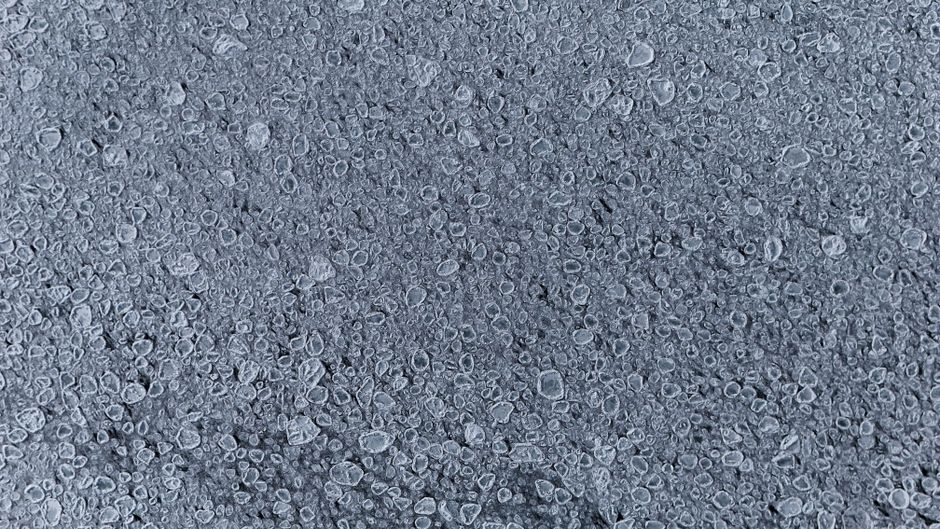
In August 2026, physicists at Rice University, Penn State, the University of Sussex, the University of Manchester, and South Dakota Mines published a study in Advanced Materials with a striking result. Tiny wrinkles in graphene - the one-atom-thick carbon lattice that has been a materials science darling since 2004 - were generating unusually powerful electrical charge through a process called flexoelectricity. When the material bends unevenly, electrons shift toward one side of the curve, creating opposite electrical poles.
The magnitude of the effect was the real surprise. The graphene nanowrinkles, compressed into spaces smaller than one nanometer, produced charge separation 100,000 to 10 million times stronger than what the same physics produces in much larger, conventional flexoelectric systems. The effect activated at approximately one volt of applied electricity.
Flexoelectricity: the physics in plain language
Flexoelectricity is related to piezoelectricity - the pressure-electricity effect in quartz crystals used in lighters and microphones - but is a different phenomenon. In piezoelectric materials, uniform compression creates charge. In flexoelectricity, it is the uneven bending - a curvature gradient, not uniform pressure - that creates charge. One side of the curve is stretched while the other is compressed, and the electrons, responding to that difference, pile up on one side.
In most bulk materials, flexoelectricity is a weak background effect. The curvature achievable at large scales is modest, and so is the resulting charge. Graphene changes this because it can be bent into extraordinarily sharp curves at the atomic scale. The same physics, applied at a radically different scale, produces a qualitatively different result.
Why does wrinkle sharpness matter more than size?
This is the finding's central insight, and it cuts against intuition. You might expect that a larger, deeper wrinkle would generate more charge. The Rice team found the opposite: the curvature at the peak of the wrinkle - how sharply it bends - mattered far more than how tall or wide it was. Lead researcher Sathvik Ajay Iyengar described the wrinkle as acting like two opposite electrical sides like the ends of a tiny battery, driven by the sharpness of the curve, not the height.
This has a practical implication that matters for engineering. It means you do not need to dramatically crinkle graphene to get a large electrical effect. Extremely subtle, sharp bends can generate strong charge separation. The geometry, not the gross deformation, is the active mechanism. Controlling that geometry with precision is the next engineering challenge.
What does this mean for future electronics?
Right now, to change how a semiconductor material conducts electricity, you add dopants - other atoms or molecules - to shift the electron balance. That is chemistry. This discovery points to an alternative: change the shape instead. Bend it differently, and you may get different electrical behavior without altering the material's composition.
The implications are real, if distant. More sensitive sensors could exploit this effect - pressure sensors in wearables, acoustic sensors in smartphones, or medical diagnostic devices might become smaller and more responsive if graphene's flexoelectric response can be harnessed. Ultrathin electronic devices, which are limited by how well you can chemically dope a one-atom-thick material, could potentially use curvature control as an additional tuning lever.
That said, future electronics here means a horizon of years, not months. The researchers frame this as opening a research direction. If you are evaluating materials for a current project, this is a basic science result to know about, not a technology to deploy in 2026 or 2027. For a look at how graphene's three-dimensional structures are already finding applied uses, see this overview of 3D graphene foam applications.
What the graphene-turns-into-a-battery headlines get wrong
Several outlets described the finding as turning graphene into a battery. This is a compelling headline but a misleading one. What the team measured is charge separation - a difference in electric potential between two sides of the wrinkle. The two-opposite-sides analogy is a useful mental image, not a literal claim about energy storage. Graphene nanowrinkles do not store and release electrical energy the way a battery cell does.
There is also a measurement limit to acknowledge. The nanowrinkles were too small for complete direct observation using current microscopy techniques. Some key results were inferred from models combined with partial direct measurement, not from full direct observation of every variable. The team explicitly noted that additional confirmation should come with future studies. The core result - that sharp graphene wrinkles generate unusually strong flexoelectricity - is peer-reviewed and published, but it should be read as an early, foundational finding rather than a fully validated engineering platform.
What to watch next
The most important follow-up question is whether researchers can place graphene wrinkles deliberately at controlled curvatures. Right now, the wrinkles studied arose from graphene grown on specific substrates, a process that is not fully controllable. For this to become a technology, scientists need methods to position wrinkles at specific locations with specific sharpness, on demand. That is an unsolved challenge at the frontier of nanofabrication.
The study also validates a theoretical prediction from 2008 - meaning the underlying physics was anticipated for nearly two decades before this experimental confirmation. Watch for follow-on papers that attempt full direct observation without relying on models, and for groups attempting to engineer wrinkle geometry intentionally. Related quantum-scale phenomena discovered at room temperature - like the work on phonon focusing for AI chip cooling - show how fast this area is moving.
FAQ
What is flexoelectricity, and how is it different from piezoelectricity?
Piezoelectricity generates charge when a material is uniformly compressed or stretched. Flexoelectricity generates charge from uneven bending - a curvature gradient, not uniform pressure. Graphene's extreme thinness lets it achieve very sharp bends at the nanoscale, which is why its flexoelectric response is so much stronger than in bulk materials where curvature is limited.
What are graphene nanowrinkles, and where do they come from?
Graphene nanowrinkles are tiny folds in the one-atom-thick carbon lattice, typically formed when graphene is grown or deposited on a substrate with a different thermal expansion rate. As the system cools, the mismatch causes the graphene sheet to buckle into creases smaller than a nanometer wide - far too small to see without specialized instruments like electron microscopes.
Does this mean graphene could be used in actual batteries?
Not based on this research. The battery language in headlines is a metaphor for charge separation, not energy storage. What the team found is an electrical potential difference between two sides of a wrinkle. That is analogous to battery terminals in a narrow conceptual sense, but does not involve storing or releasing energy. Separate research and engineering would be needed to harvest that potential for energy storage.
How long until this becomes a commercial product?
Most likely years to decades. This study validates a physical effect, not a manufacturable device. Key engineering challenges remain unsolved, including how to place wrinkles deliberately at controlled curvatures on a chip. Fundamental materials science discoveries like this typically take five to twenty years to reach commercial products, if they do at all. The finding opens a direction; it does not close a product development gap.
Which institutions were involved, and where was it published?
The study was led by Pulickel Ajayan's group at Rice University, with co-corresponding authors Vincent Meunier at Penn State and Manoj Tripathi at the University of Sussex and South Dakota Mines. Additional collaborators came from the University of Manchester and the University of Brighton. The paper appeared in the journal Advanced Materials in August 2026.
Source(s): Rice University News (2026); ScienceDaily (2026)
About the author
Dao Huy (Lucas) is a professional translator working across English, Vietnamese, Chinese, and French, with more than seven years of experience in technical, legal, and scientific texts. He follows the frontier of materials science and AI out of genuine curiosity, because precision in language and precision in physics share the same discipline: saying exactly what is true, nothing more. He writes these posts to share what caught his attention each week, in plain language, for readers who want to stay sharp without the hype.
If you need accurate English-to-Vietnamese translation for research summaries, technical documentation, academic publications, or scientific localization, Lucas offers a free quote at daohuy.com.
Written by Dao Huy (Lucas), Vietnamese translator & localization specialist (EN · ZH · FR → Vietnamese). See translation services →