
Typhoon Season in Da Nang: What Foreigners Need to Know (2026)
💡 Central Vietnam's typhoon and flood season runs from October to December, peaking in October and November. If a typhoon warning is issued in Da Nang, stay indoors, follow your hotel's instructions, and monitor official forecasts at nchmf.gov.vn. Save 113 (police) and 112 (national rescue) in your phone before you need them.
Key takeaways
- Typhoon season in Central Vietnam peaks in October and November. Storms can develop rapidly and make landfall with little warning.
- Monitor Vietnam's official forecast authority at nchmf.gov.vn. Your hotel will also receive alerts from Da Nang city authorities. The UK FCDO and US Embassy both issue alerts to registered travellers.
- When a typhoon warning is issued: stay indoors, stock 48 to 72 hours of water and food, charge your devices, and avoid riding a motorbike. Standing water hides open drains and potholes.
- Hoi An floods more reliably than Da Nang every October to November. Check local conditions before visiting the ancient town during this period.
- Emergency numbers: 113 (police), 115 (ambulance), 112 (search and rescue for large-scale disasters). All work from any SIM card, including roaming. Dispatchers speak Vietnamese only.
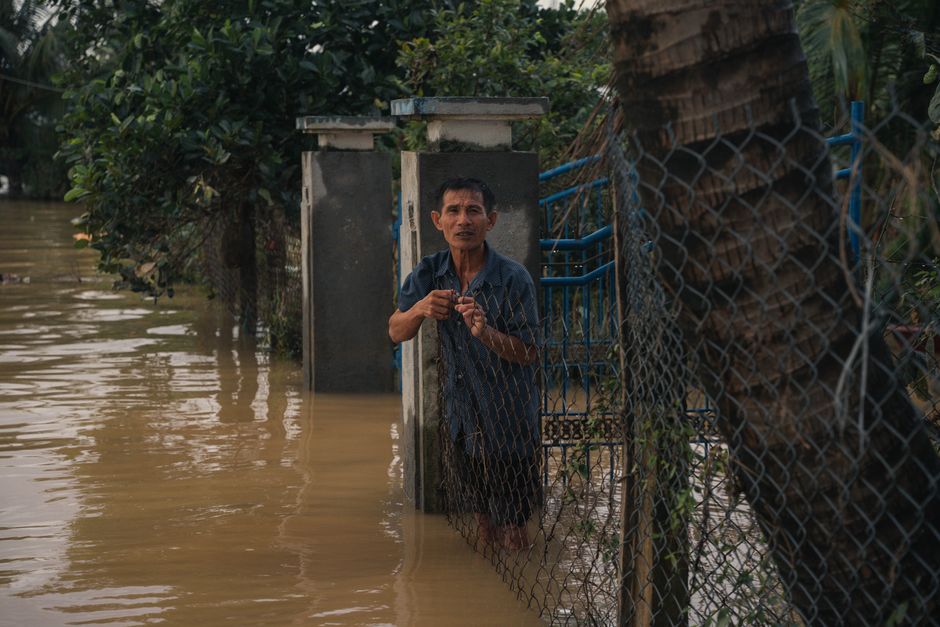
When is typhoon season in Da Nang and Central Vietnam?
Da Nang sits on the coast of Central Vietnam, directly exposed to the South China Sea. The UK Government's Vietnam travel advice confirms that tropical cyclones can affect eastern coastal Vietnam from May to November, but Central Vietnam's peak flooding and storm period runs from October to December. October and November are the months to watch most closely.
Storms typically track westward across the South China Sea after forming in the Philippine Sea or the western Pacific. They can intensify quickly and bring days of heavy rainfall. Even a tropical depression that stays offshore can deliver enough rain to flood roads, cut off Hoi An, and close the Hai Van Pass for 24 to 72 hours.
Vietnam's official weather authority categorises storms from tropical depressions up to category 12 and above, based on sustained wind speed. Check nchmf.gov.vn for the current classification before any trip north over the Hai Van Pass or south to Hoi An during this period.
What should you do when a typhoon warning is issued?
When Da Nang issues a storm alert, the city notifies hotels and accommodation operators. Your hotel is your primary source of instructions as a foreigner. Reputable hotels receive official city directives and will tell you when to shelter in place or, in rare cases, to evacuate.
Before typhoon season starts (before October), take a few minutes to prepare:
- Save the Da Nang Tourist Support Center: (0236) 3 550 111, 108 Bach Dang Street. Basic English assistance available there.
- Download Grab and have a backup route that does not require a motorbike.
- Register with your embassy's travel alert service to receive storm warnings automatically.
When a warning is active: stay indoors and away from windows; stock at least 48 to 72 hours of bottled water, food, and any prescription medication; charge your devices fully; and do not ride a motorbike. Flooded roads hide open drains and can knock a bike over in shallow water. For motorbike safety, see the Da Nang Help motorbike accident guide.
Know your hospitals before the storm, because calling for Grab may not be possible if roads are flooded:
- Vinmec Da Nang International Hospital: 30 Thang 4 Street, Da Nang. Tel 0236 3711 111; international patients +84 378 809 779. 24-hour operation. English and multilingual staff.
- Family Medical Practice Da Nang: 96-98 Nguyen Van Linh, Hai Chau. 24/7 emergency +84 913 917 303. English-speaking doctors. Confirm direct insurance billing with your insurer.
- Da Nang Hospital (public ER): 124 Hai Phong, Hai Chau. Tel 0236 3821 118. 24/7 emergency. Main public hospital for the region. For help navigating care in a foreign language, see the hospital interpreter guide.
Where do you get official storm warnings?
The primary official source is Vietnam's National Centre for Hydro-Meteorological Forecasting at nchmf.gov.vn. The site is in Vietnamese, but the storm-alert map is intuitive: a storm symbol on the coast means a current or imminent alert for that region. The Japan Meteorological Agency provides English-language typhoon tracking that covers the South China Sea.
The UK Government's Vietnam travel advice (safety and security) recommends monitoring the NCHMF and local media during cyclone season. The US Embassy and Australian Smartraveller also issue alerts to registered citizens.
Locally, the Da Nang Tourist Support Center at (0236) 3 550 111 and the city portal at danang.gov.vn provide updates during active storm alerts. Your hotel will relay official city directives.
Is it safe to travel to Da Nang during typhoon season?
Most years, yes. Da Nang has a solid emergency management system, and most seasons only one or two significant storms affect Central Vietnam. The concrete hotels along My Khe Beach are well-built and often used as shelter during storms.
The genuine risks are flooding in low-lying areas, damaged or closed roads, and flight cancellations. If you are visiting in October or November:
- Buy comprehensive travel insurance that explicitly covers disruption from natural disasters. Confirm the policy wording before you purchase.
- Book accommodation with a flexible cancellation policy.
- Monitor forecasts from a week before you arrive, not just on the day.
- Avoid scheduling time-sensitive connections (cruise embarkations, onward flights) immediately after a Da Nang departure in October or November.
For wider guidance on staying safe in the region, visit the Da Nang Help center.
Flooding in Hoi An and coastal towns
Hoi An, 30 km south of Da Nang, sits at the mouth of the Thu Bon River and floods more reliably every October and November than Da Nang itself. Streets in the ancient town can reach knee to waist depth within hours of heavy rain. If you are staying in Hoi An or planning a day trip during this season, preparation is different from Da Nang: many guesthouses sit at ground-floor level, and knowing the evacuation plan matters.
The road over Hai Van Pass, connecting Da Nang to Hue, becomes treacherous in heavy rain: rock falls, mudslides, and standing water are documented hazards. If there is any storm activity in the forecast, use the Hai Van Tunnel instead of the mountain road. Check nchmf.gov.vn before driving north.
FAQ
How do I know if a typhoon is heading for Da Nang?
Check nchmf.gov.vn for the official storm map. Your hotel will also alert you when the city issues a warning. Register with your embassy's travel alert service before you arrive: the UK FCDO, US Embassy, and Australian Smartraveller all send email or SMS alerts to registered citizens during active storm periods.
Should I cancel my trip to Da Nang in October or November?
Not necessarily. Most years only one or two significant storms affect Da Nang during this period. Monitor the NCHMF forecast in the week before you travel. If there is a named storm tracking toward Central Vietnam, consider postponing that specific week. Comprehensive travel insurance and flexible accommodation bookings are the practical safeguards.
What do I do if I am already in Da Nang when a typhoon hits?
Stay in your hotel, away from windows, and follow the instructions of hotel staff. Do not go outside during the storm. Keep your phone charged. After the storm passes, wait for an official all-clear before venturing out: roads may be blocked, flooded, or have fallen debris. Call (0236) 3 550 111 (Da Nang Tourist Support) if you need guidance.
Does travel insurance cover typhoon disruption in Vietnam?
It depends on the policy. Many standard travel insurance policies cover flight cancellations and accommodation costs caused by natural disasters, but some exclude events flagged as foreseeable if a storm warning was already issued when you purchased the policy. Read the policy wording carefully and confirm coverage includes Vietnam and natural disaster disruption specifically.
Is the Hai Van Pass safe during typhoon season?
Not during active rain or a storm warning. The mountain road over Hai Van Pass is prone to rock falls, mudslides, and standing water in heavy rain. If there is any storm activity in the forecast, use the Hai Van Tunnel instead. Even outside active warnings, the pass can be slippery and foggy from October to December.
Official sources
- UK Government, Vietnam travel advice: safety and security - confirms cyclone season (May to November) and flooding in central Vietnam (October to December). Verified September 2026.
- Vietnam National Centre for Hydro-Meteorological Forecasting (NCHMF) - Vietnam's official storm alert and weather forecast authority. Verified September 2026.
- Da Nang City Government (English portal) - official city information and visitor support contacts. Verified September 2026.
Written by Dao Huy (Lucas), a Vietnamese translator and English-speaking local in Da Nang. When paperwork or an emergency turns into a Vietnamese-language wall, I come with you in person and provide the signed translations that go with it. Get help in Da Nang → · Certified translation →