
Do cold showers and ice baths actually have health benefits?
💡 Cold showers and ice baths have some real benefits: a 2025 meta-analysis of 3,177 adults found that stress reduction is the strongest measurable effect, peaking 12 hours after immersion. Sleep quality and quality of life also improved modestly. Controlled studies found no significant effect on mood or immunity, two of the most widely repeated claims.
- The strongest consistent benefit is stress reduction, appearing 12 hours after cold immersion - effect size SMD -1.00 in a 2025 PLOS ONE meta-analysis of 3,177 adults
- Cold showers were linked to higher quality-of-life scores and 29% fewer sick days in one 90-day trial
- Sleep quality improved for men but not significantly for women across the trials reviewed
- Controlled studies found no significant improvement in mood, contrary to popular claims
- Recommended protocol: 7 to 15°C water, 2 to 15 minutes; consult a doctor if you have cardiovascular conditions
- Journal
- PLOS ONE
- Type
- Systematic review and meta-analysis (11 randomized controlled trials)
- Sample
- 3,177 healthy adults (55% female)
- Published
- January 2025
- Institution
- University of South Australia (ARENA)
What does the evidence actually say about cold exposure?
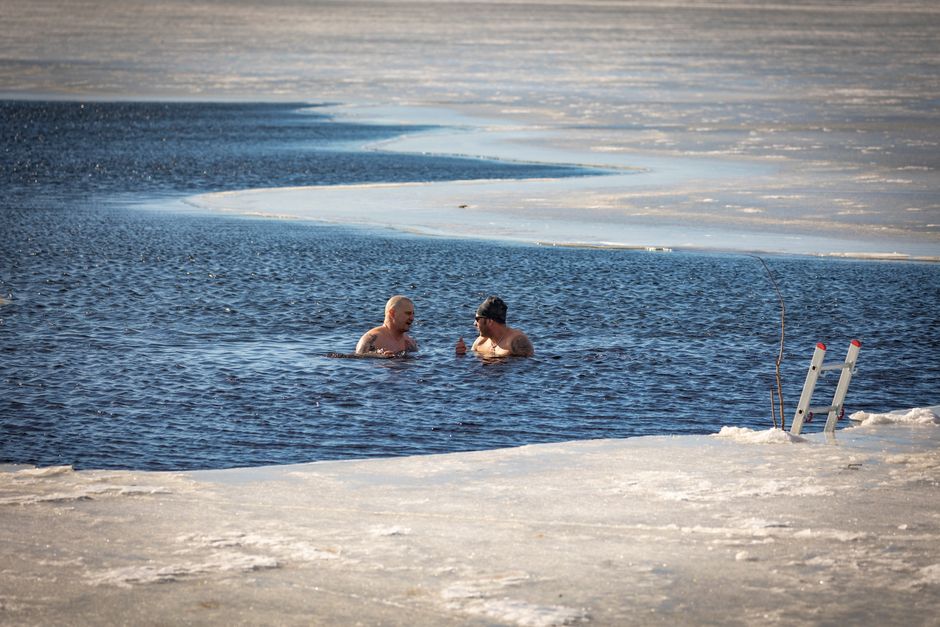
Cold-water immersion (CWI) means submerging part or all of the body in water at 7 to 15°C (45 to 59°F) for 30 seconds to 15 minutes. It goes by many names: ice bath, cold plunge, cold hydrotherapy, and winter swimming. The practice has surged in popularity, driven by athletes, podcasters, and wellness influencers who describe dramatic wellbeing benefits.
The most comprehensive current evidence comes from a January 2025 systematic review and meta-analysis in PLOS ONE, led by Tara Cain at the University of South Australia. The team pooled results from 11 randomized controlled trials covering 3,177 healthy adults and assessed outcomes including stress, mood, sleep, inflammation, immunity, and quality of life. Because it pools randomized controlled trials, this is the strongest study design currently available for this topic.
Which benefits are backed by evidence, and when do they appear?
The clearest finding: cold-water immersion does reduce perceived stress, but the timing is counterintuitive. Effect sizes were not significant immediately after immersion or at 1 hour. The reduction appeared at 12 hours post-immersion (standardized mean difference: -1.00, a large effect). The stress relief is not a post-swim rush but a gradual shift that unfolds through the rest of the day.
Quality-of-life scores were modestly higher among regular cold shower users. One trial found that participants who took cold showers over 90 days had 29% fewer sick days - a meaningful real-world outcome, though not a direct immune measurement. For sleep quality, improvements in the CWI studies appeared for men but not significantly for women. For a related strategy, see how magnesium affects sleep quality - a better-studied pathway for the same outcome.
For athletes, the recovery evidence is more consistent. Post-exercise CWI reduces creatine kinase levels and delayed-onset muscle soreness (DOMS). Paired with regular zone-2 cardio training, a post-session cold bath may shorten recovery time between hard sessions.
What does cold exposure NOT reliably do?
Despite the enthusiasm online, the 2025 meta-analysis found no significant effect on mood in controlled comparisons. The popular narrative of "a dopamine hit from cold showers" is not confirmed by blinded trial data. Mood is easily shaped by expectation and context: people who choose cold exposure may feel accomplished or alert after the session, but controlled studies cannot separate that from the cold water itself.
Immunity is equally overclaimed. The review found no significant changes in immune markers immediately or at 1 hour after immersion. The 29% sickness-absence figure is promising but comes from a single study measuring absence rather than immune function directly, and cold-shower adopters tend to share many other healthy habits that confound the result.
What actually happens in your body during cold immersion?
Cold water triggers an immediate cascade: blood vessels constrict sharply (vasoconstriction), heart rate jumps, breathing quickens, and stress hormones including adrenaline and noradrenaline spike. This is the cold shock response. It also explains why people with cardiovascular conditions face real risk: the sudden surge in heart rate and blood pressure can be dangerous without medical clearance.
The same inflammatory markers that spike immediately after immersion (SMD +1.03 at 1 hour in the PLOS ONE data) are followed by an anti-inflammatory rebound as the body adapts. This hormetic pattern - mild controlled stress triggering beneficial adaptation - is the theoretical basis for most long-term cold-exposure claims, and it closely parallels what happens with consistent strength training for longevity.
How should you use cold exposure safely?
Based on the protocols used in studies that found measurable benefits:
- Temperature: 7 to 15°C (45 to 59°F). Colder is not better; water below 7°C increases cardiovascular risk without clear added benefit.
- Duration: 2 to 15 minutes per session. Beginners should start with 30 to 60 seconds and build slowly over weeks.
- Frequency: Multiple sessions per week, sustained over several weeks. Single exposures produce minimal measurable change.
- Timing for stress relief: A morning cold shower may produce its stress-reduction benefit 12 hours later, in the afternoon or early evening.
- For exercise recovery: 10 to 15 minutes at around 10°C within 30 minutes of hard training has the most consistent research support.
Household cold taps in most climates reach 10 to 15°C, which falls within the effective temperature range and requires no ice bath setup.
Who should avoid cold water immersion, and what are the evidence's limits?
Cold-water immersion is generally safe for healthy adults but carries real risks for certain groups. This is general information, not medical advice; consult a doctor before trying cold exposure if you have any relevant health conditions.
- Heart disease or uncontrolled high blood pressure: the cold shock response is a significant acute cardiovascular stress event
- Raynaud's syndrome or poor peripheral circulation: exaggerated vasoconstriction can cause injury
- Diabetes with peripheral neuropathy: reduced sensation increases injury risk in cold water
- Cold urticaria (cold-triggered hives): a direct contraindication
The evidence base has important limits. Six of the 11 trials tested only a single cold exposure, so sustained practice over weeks is understudied. Only one trial included substantial female participation, meaning many findings generalize primarily to men. Five studies combined cold exposure with exercise, making the effects difficult to separate. Protocols varied widely across trials - from brief cold showers to extended full-body plunges - limiting direct comparison. More long-duration, diverse-population trials are needed before stronger conclusions are warranted.
FAQ
Do cold showers boost immunity?
Controlled studies have not found significant changes in immune markers immediately after cold immersion. One 90-day trial found 29% fewer sick days among cold shower users, but this measures absence rather than immune function directly. It likely reflects other healthy habits among people who maintain cold shower routines rather than a specific immune effect of the cold.
Should I take a cold shower before or after a workout?
The evidence is strongest for post-workout use. Cold immersion at 10 to 15°C for 10 to 15 minutes after intense training reliably reduces muscle soreness (DOMS) and creatine kinase, a marker of muscle damage. Before exercise, cold immersion may reduce warm-up effectiveness and impair peak performance. For general wellbeing rather than recovery, timing is less critical.
Why doesn't a cold shower improve mood right away?
The 2025 meta-analysis found no significant mood improvement compared to control conditions. The sense of wellbeing people often report likely reflects the satisfaction of doing something hard and the natural alertness that follows - not a direct neurochemical effect of the cold. The real measurable benefit - stress reduction - peaks 12 hours after immersion, not immediately.
How cold does the water need to be for cold exposure to work?
Studies that found measurable benefits used water at 7 to 15°C (45 to 59°F). Household cold taps in most climates reach 10 to 15°C, which falls within this range. Going below 7°C increases cardiovascular risk without clear additional benefit. Consistency over several weeks likely matters more than reaching extreme temperatures in any single session.
Is cold-water immersion safe for women?
The current evidence is limited: only one of the 11 trials in the 2025 meta-analysis included substantial female participation, and sleep improvements were significant only for men. Stress-reduction and quality-of-life findings included both sexes, but more research is needed before conclusions can be extended confidently to women. The authors explicitly flag this as a key gap in the field.
About the author
Dao Huy (Lucas) is a professional translator working between English, Vietnamese, Chinese, and French, with over seven years of experience in certified and technical translation. He writes these explainers out of genuine curiosity about how the world works - reading primary research and translating the findings into plain language across four languages, the same clarity he brings to every translation project.
Need English-Vietnamese document translation, certified copies, or multilingual localization? Lucas can help. Get a free quote at daohuy.com.
Written by Dao Huy (Lucas), Vietnamese translator & localization specialist (EN · ZH · FR → Vietnamese). See translation services →